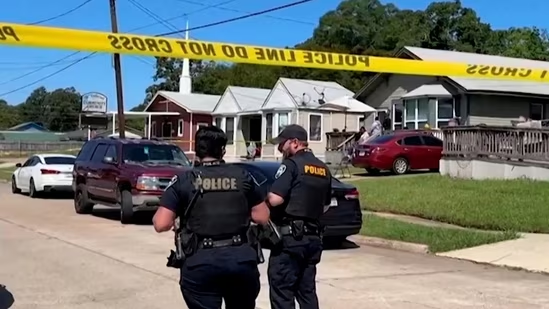
Nancy Guthrie case update: Nancy Guthrie was reported missing by her family on February 1. Authorities believe she was taken from her home in Catalina Foothills, near Tucson, Arizona, the night before. It has been over two months, and no trace of Guthrie has been found. Amid this, a lot of interest had shifted onto family members, including daughter and TODAY show host Savannah Guthrie, and siblings Annie and Camron.
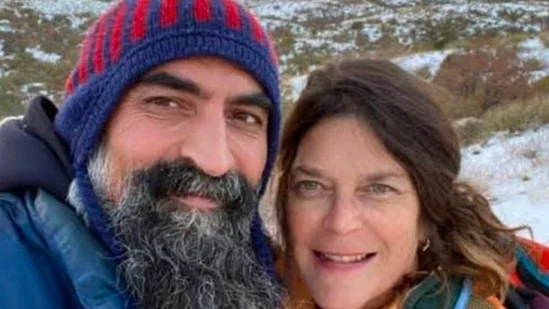
However, the ones who bore the brunt of it are Annie and her husband Tommaso Cioni. The latter was named as a possible suspect in a report from former NewsNation journalist Ashleigh Banfield. Pima County Sheriff’s Department junked the report and Chris Nanos, later, clarified that none of the family members were suspects in the case. By then, there was already a lot of chatter surrounding Cioni. A lot of it stemmed from the fact that Guthrie had had dinner with Annie the night before she was reported missing and it was also reported that Cioni had dropped her home after, making the two among the last people to see her before she was taken.
Also Read | Abandoned red Honda, call from burner phone: True crime page teases release of chilling new info in Nancy Guthrie case
Savannah had actually addressed the speculation directed at Annie and Cioni, while speaking to NBC colleague Hoda Kotb. She discussed the emotional toll of the speculation and that it had been hard on both Annie and Cioni.
Now, an expert has also opined why the duo might be in even deeper trouble with the Guthrie kidnapping and explained the problems Annie and Cioni need to overcome.
Why Annie, Tommaso Cioni are facing trouble?
Dr. Jenny Shields, founder of Shields Psychology & Consulting, PLLC in The Woodlands, Texas, spoke about the impact of the case on Annie and Cioni specifically.
She is a licensed psychologist and certified healthcare ethics consultant, who spoke with Parade about how Annie and Cioni might try navigating the situation, given the scrutiny and blame game going on.
Explaining the need to blame someone in such cases, the expert said “When something terrible feels random, people instinctively search for a reason. If they can point to a mistake, a lapse, or a person to blame, they get to feel that the world is still orderly and predictable. Psychologically, blame often works as a form of self-protection. It helps the observer create distance from the terrifying thought that this kind of tragedy could happen to anyone.”
She gave more context and said “Blame is often just a thin veil for fear. When a tragedy feels random, the mind demands a reason. By identifying a ‘mistake’ or a ‘lapse’ in the family, the public restores a sense of order. We tell ourselves, ‘As long as I don’t make their mistake, I am safe.’ It is a tool for self-reassurance, but it comes at a devastating cost to the family left behind.”
Shields also detailed how the human mind works in such cases. “The human brain abhors a vacuum. When there are no facts to fill the void of a disappearance, the public mind will inevitably fill it with a narrative of suspicion. We would rather have a ‘guilty party’ than accept the terrifying reality of a random, senseless tragedy,” she told the publication.
Coming to Annie and Tommaso’s case, Shields has explained that the ‘public dimension changes grief completely’. “Grief normally requires vulnerability. It requires room to be disoriented, inconsistent, numb, angry, or quiet. Public scrutiny does the opposite. It keeps the nervous system on high alert.”
Shields claimed that Annie and Cioni might be finding it harder to process their emotions, especially grief, since so many eyes were on them. “When every expression, every silence, and every decision is being interpreted, the bereaved are forced to manage two realities at once: the private pain of loss and the public pressure to appear as though they are grieving in the ‘right’ way. You cannot fully process a tragedy when part of you is still bracing to defend yourself from it,” the doctor said.
“A family already living through fear, heartbreak, and uncertainty can end up carrying a second burden: the pressure to defend themselves inside a story the public keeps trying to simplify before the facts are clear,” Shields continued.
The medical expert further said that when people ‘rush’ to ‘find a villain’ they often cause a ‘second injury’ implying Annie and Cioni have to bear this hurt now.
While Shields’ remarks came towards the start of April, the couple has indeed been left reeling from the intense scrutiny directed towards them. A YouTuber recording in front of Cioni and Annie’s home saw the former come out ask to be left alone. The couple has also reportedly put up ‘no trespassing’ signs in front of their house as public interest in the Guthrie case persists.