Iranian chiefs issue strong hint of a secret weapon as it emerges they likely still have most of their deadly missiles and could now trigger a fresh blockade from Houthi proxies
Iranian forces likely still have 70% of their pre-conflict ballistic missiles, 60% of their launchers and at least 40% of their drone stockpiles, according to fresh intelligence analysis. News of Tehran’s deadly remaining arsenal emerged as Iran warned it still has “cards to play” in mockery of Donald Trump ’s language amid fears it could trigger the Yemeni Houthis.
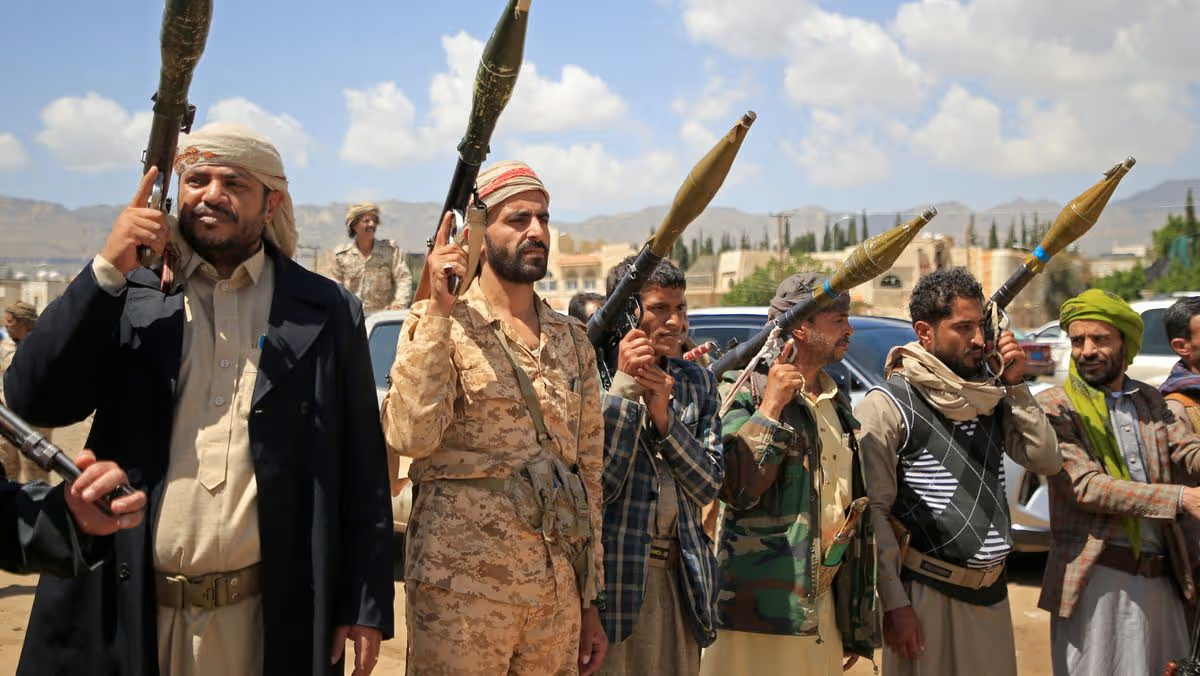
The rise in tension has heightened alarm in the region in the hours before the current two week ceasefire expires on Wednesday. If the Houthis become involved in the war there are increasing fears they could close the Baba el-Mandeb Strait, which has become a crucial alternative to the blockaded Hormuz passage.
READ MORE: Fears Iran war will explode again as defiant Tehran shuns peace talks despite Trump’s threatsREAD MORE: Iran war ramping up the risk of terrorism in UK – arson and drone attacks
Ali Abdollahi, commander of Iran’s Khatam al-Anbiya Central Headquarters, which is its wartime command, said Tehran had the upper hand militarily. He added that he would not allow Donald Trump to “create false narratives over the situation on the ground,” as there were fresh warnings of a new Iranian war move.
Iranian parliamentary speaker, Mohammad Bagher Ghalibaf, who is expected to head the Iranian delegation if peace talks take place in Pakistan, warned they were “prepared to reveal new cards on the battlefield.” He also said Iran would not accept negotiations with the US while under threat, adding today that “we have prepared to reveal new cards on the battlefield.”
A UK intelligence assessment report, seen by the Mirror, summarises the remaining Iran threat by writing: “US intelligence assessments have suggested that Iran likely still has access to around 70 percent of its pre-conflict ballistic missile stockpiles, and around 60 percent of its missile launchers.
“It also still retains around 40% of its drone arsenal. A senior official from Yemen’s Houthis has warned that the group could close the Bab al-Mandeb Strait if US President Donald Trump continues what he described as obstructing peace. The Bab al-Mandeb connects the Red Sea to the Gulf of Aden and is a key shipping route for global trade, particularly oil and other fuels moving between the Gulf, Europe and Asia.”
If this happens it would mean a second closure of a major trade route as a result of the US-Iran war along with the Strait of Hormuz. It is thought US Vice President JD Vance will fly to Pakistan today hoping for peace talks with Iran.
He led the US team during failed talks with Iran earlier in the month, which collapsed after Iran would not agree to demands to end nuclear enrichment and hand over its 440kg of highly enriched uranium. The Iranians have said they do not trust US, and wanted assurances they would not be attacked again if a final agreement was reached.
Pakistan has locked down security, suspending public transport in the capital. Islamabad’s electricity board also promised that power cuts would be suspended in the city while negotiations continue. Iran has not yet confirmed it will turn up for the talks.
Distrust between the two sides has grown as a result of Iran coming under attack several times before whilst peace negotiations were underway. The regime fears more talks could be a cover for a fresh attack.
Iran’s High Council for Human Rights has condemned US attacks on religious, cultural and historical sites across the country, saying the attacks reveal a deliberate attempt to destroy symbols of religious minorities. The claims were made through state media.
That includes a claimed strike on the Tehran Jewish Synagogue, a historic place of worship, as well as damage to the Nicholas Orthodox Cathedral and St Mary Greek Orthodox Church. The statement said: “These attacks not only demonstrate the complete disregard of these aggressor regimes for basic human rights and international standards, but are evidence of a sinister intention to eliminate the identity symbols of religious minorities in Iran.”