
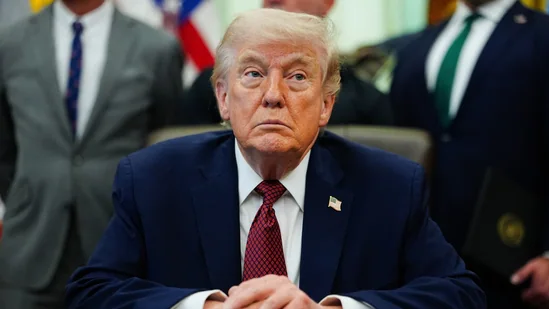
The Donald Trump administration has proposed a sweeping $1.5 trillion defense budget for 2027 which is one of the largest military spending plans in US history. The proposal is now heading to Congress and it highlights a major shift toward national security while cutting billions from domestic programs.
A record defense budget and what’s driving it
The White House is asking for about $1.5 trillion in total defense spending, a 42% increase compared to previous levels. The plan includes roughly $1.1 trillion in base funding and another $350 billion in additional resources aimed at boosting munitions production and expanding the defense industrial base.
The increase comes as the US continues to spend heavily on the war in Iran with officials also preparing a supplemental funding request to cover ongoing costs. The proposal includes a 5 to 7% pay raise for troops and $65.8 billion for shipbuilding and restocking weapons that have been used in recent conflicts.
“This amount exceeds even the Reagan buildup by approaching the historic increases just prior to World War II, a level that recognizes the current global threat environment and restores the readiness and lethality of our forces,” a White House summary states.
The budget also reflects concerns about global threats, particularly from countries like China and Russia and aims to strengthen US military readiness. Overall defense-related funding could rise to around $1.15 trillion in base spending alone, compared to roughly $890 billion to $901 billion authorized under the 2026 National Defense Authorization Act, cited by Fox News.
Also Read: US admiral explains Trump’s ‘brilliant’ plan that will force Iran to concede defeat
What are the key military spending priorities and investments?
A major focus of the proposal is rebuilding military stockpiles and investing in new technologies. The plan calls for accelerated production of critical weapons and expanded support for domestic manufacturing.
Shipbuilding is a key priority with funding requested for 18 Navy battle force ships and 16 additional vessels. At the same time, the budget continues investment in nuclear modernization and advanced defense systems.
One of the biggest highlights is the push toward emerging technologies. The proposal includes funding for artificial intelligence, drones, counter-drone systems and next-generation aircraft like the F-47 fighter jet which is designed to operate alongside autonomous systems.
The plan also includes $17.5 billion for the “Golden Dome,” a space-based missile defense system designed to use sensors and interceptors to protect the US from potential threats. Spending for the Space Force would also rise sharply, showing how space is becoming a critical area for future defense strategy.
Beyond weapons, the budget links national security with industrial policy. It includes funding to boost domestic production of critical minerals, strengthen supply chains and invest in advanced computing, including artificial intelligence systems at national laboratories.
Also Read: Social Security payments: Will you get paid on April 22? Check eligibility and full SSI schedule here
What cuts are proposed to domestic spending and what happens next?
While defense spending is increasing, the proposal includes a 10% cut in nondefense spending, reducing it by about $73 billion. And Nondefense funding is projected to drop to around $660 billion.
The White House says this will be done by shifting some responsibilities to state and local governments and cutting programs it considers unnecessary.
“Savings are achieved by reducing or eliminating woke, weaponized, and wasteful programs, and by returning state and local responsibilities to their respective governments,” the White House said.
The plan outlines cuts to several areas, including health programs, refugee support, scientific research and housing. Agencies like NASA, the Environmental Protection Agency and the State Department would see significant reductions, according to Fox News.
According to CBS News, some areas receive increases, including $481 million to hire more air traffic controllers and improve aviation safety, as well as $605 million for National Guard mobilizations in Washington, DC. The Department of Justice would see increased funding to address crime and drug trafficking, while immigration enforcement and border operations would continue to receive strong financial support.
The proposal also suggests reducing foreign aid by around 30% while creating a new $5 billion fund to support strategic partnerships and help allied nations purchase US defense equipment.
The proposal now moves to Congress where lawmakers will debate and negotiate the final budget. While presidential proposals often change during this process, this plan clearly shows a strong focus on military strength, border security and national defense with reduced emphasis on domestic programs.