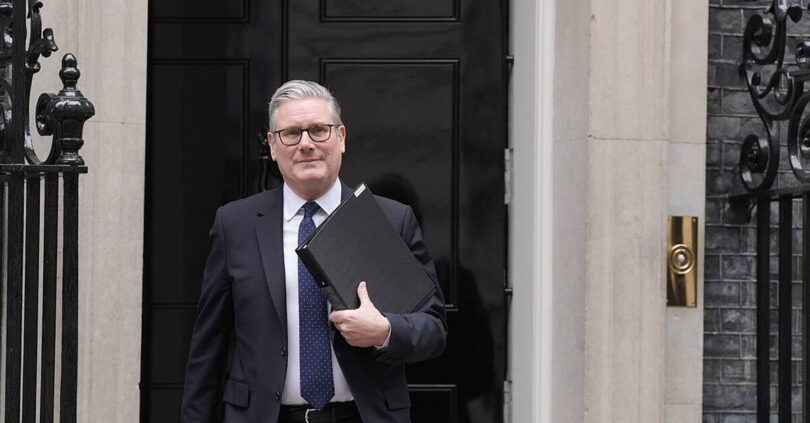
Keir Starmer told MPs it was “staggering” that he was not told Peter Mandelson had failed vetting checks and acknowledged Parliament should have known about it “a long time ago”.
The British Prime Minister said UK Foreign Office officials had approved Mandelson’s developed vetting status, enabling him to see secret information as ambassador to the US, despite the recommendation of security experts not to grant clearance.
Starmer said he would not have proceeded with the appointment of Mandelson if he had known UK Security Vetting (UKSV), the agency responsible for conducting assessments, had declined to approve the peer.
The British Prime Minister effectively fired the UK Foreign Office’s top civil servant Olly Robbins after finding out last week that Mandelson’s vetting status had been granted despite failing the UKSV check.
But Starmer insisted he took personal responsibility for the ultimate decision to appoint the controversial former Cabinet minister to the Washington post.
Mandelson was sacked in September last year after revelations about the extent of his relationship with disgraced financier Jeffrey Epstein.
Starmer said: “At the heart of this, there is also a judgment I made that was wrong. I should not have appointed Peter Mandelson.
“I take responsibility for that decision, and I apologise again to the victims of the paedophile Jeffrey Epstein, who were clearly failed by my decision.”
The scandal has fuelled calls for Starmer to resign, both from opposition parties who accused him of misleading the British Parliament, but also from his critics within the Labour movement who already fear an electoral bloodbath for the party in May’s contests in English councils and the Scottish and Welsh parliaments.
Starmer said he only found out last Tuesday that Mandelson had been given developed vetting clearance “against the specific recommendation of the United Kingdom Security Vetting”.
“Not only that, the Foreign Office officials who made that decision did not pass this information to me, to the Foreign Secretary, to her predecessor the Deputy Prime Minister, to any other minister, or even to the former cabinet secretary Sir Chris Wormald.”
He added: “This is information I should have had a long time ago, and it is information that the House should have had a long time ago.
“It is information that I and the House had the right to know.”
He said the UKSV recommendation “could and should have been shared with me” and if he had known “I would not have gone ahead with the appointment.”
The terms of a probe into government security vetting have been updated in light of the latest revelations about Mandelson and the inquiry will be led by Adrian Fulford, a senior judge and chairman of the Southport Inquiry.

Tory leader Kemi Badenoch said Starmer’s claim in the Commons that “full due process” was followed was not true.
Emily Thornberry, Labour chairwoman of the Commons Foreign Affairs Committee, said: “I am afraid to say, doesn’t this look like, for certain members of the Prime Minister’s team, getting Peter Mandelson the job was a priority that overrode everything else and that security considerations were very much second order.”
Starmer denied this, telling her it was “unforgivable” that the committee was not given the full information about Mandelson’s appointment because ministers had not been informed.
He said “a deliberate decision was taken to withhold that material from me” on repeated occasions and “this wasn’t an oversight”.