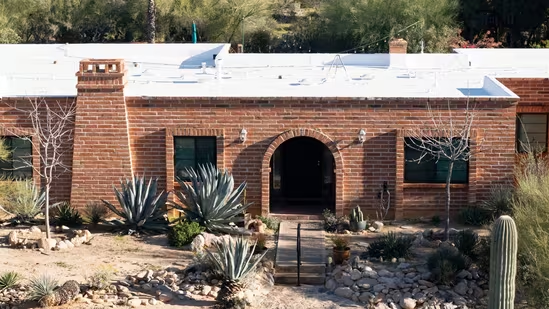
A University of California, Los Angeles professor has outlined the grim reality that the Nancy Guthrie case has hit, as the FBI is now turning to cutting-edge DNA technology in an attempt to locate Savannah Guthrie’s missing mother. The FBI recently received a DNA sample collected at Nancy’s residence in Arizona from a private Florida laboratory that partnered with the Pima County Sheriff’s Department.
Now, FBI agents are using advanced forensic techniques on the evidence, hoping to crack the case.
‘They are obviously running out of options’
A criminal justice professor at UCLA, who is familiar with criminal abduction cases, told the Irish Star that the FBI’s decision to re-examine existing evidence with newer technology leaves a clue.
Read More | Savannah Guthrie delivers emotional Easter message amid search for mom Nancy, ‘Cruel injury of not knowing…’ | Video
“When a law enforcement agency of that size starts farming out old samples to multiple labs, that tells you the original leads they chased have gone cold,” the professor said. “They’re not finding new evidence, honestly, they’re trying to squeeze more out of what they already have. They are obviously running out of options.”
The new DNA is a mixed sample, which means it contains a genetic makeup from more than one person.
Pima County Sheriff Chris Nanos had admitted that the new evidence presents major challenges for his department. He has warned that results could take “weeks, months or maybe a year.”
The professor stressed that mixed DNA samples do pose a challenge and can be very frustrating.
Read More | Nancy Guthrie case: Why Annie Guthrie, Tommaso Cioni are back in focus as police increase patrols in neighborhood
“You can have many contributors in a single sample and spend enormous resources, including both time and money, trying to isolate just one usable sample profile,” he said. “The FBI bringing in fresh technology shows me they believe a suspect’s DNA is in the sample; they just haven’t been able to pull out a clean and clear sample yet.”
Nanos previously said that the Sheriff’s Department is still working with the FBI, labs around the country and forensics examiners on “thousands (of hours) of video footage we still have to sort through.”