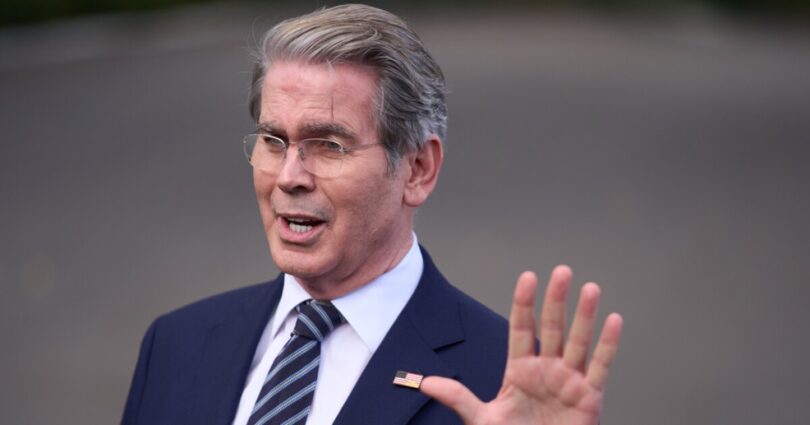
The Trump administration on Friday extended a temporary waiver of sanctions on Russian oil and petroleum products, despite Treasury Secretary Scott Bessent’s public statement Wednesday that his agency would not.
The updated waiver — published late Friday evening and signed by Bradley Smith, director of Treasury’s Office of Foreign Assets Control — authorizes the sale of such products at sea through May 16. It follows previous moves by Treasury to issue waivers on oil and petrochemicals from Russian and Iranian origin, which the Trump administration said were needed to help offset the rising cost of oil resulting from the Iran conflict and would not significantly benefit the sanctioned nations.
As recently as Wednesday, Bessent said Treasury would not be extending the sanctions waivers for either nation, suggesting they served their purpose.
“We will not be renewing the general license on Russian oil, and we will not be renewing the general license on Iranian oil,” Bessent said during a White House press briefing. “That was oil that was on the water prior to March 11. So all that has been used.”
A source familiar with the situation claimed the reversal came at the request of partner nations, as economies around the world grapple with the energy crisis brought about by the war.
“On the sidelines of Bank Fund and G-20, partner nations requested the U.S. extend the waiver due to ongoing pressures in Asia,” the source, who was not authorized to speak publicly, told Scripps News.
RELATED NEWS | Oil markets immediately drop after Trump and Iran say Hormuz is open
Despite positive stock market moves Friday in response to news that the White House and Iran had made progress in negotiations to end the war, many nations around the world remain struggling with the sudden surge in energy costs. Asian economies in particular have been severely impacted by the closure of the Strait of Hormuz.
Economic experts and a U.S. government analysis have suggested it will take months if not longer for the global energy market to recuperate once traffic in the Strait returns to historic levels.
Some U.S. lawmakers, meanwhile, have already expressed anger at the extension.
“This decision is shameful and a 180-degree reversal from Secretary Bessent, just two days after he pledged not to extend sanctions relief for Russia,”Senate Majority Leader Chuck Schumer (D-NY) in a statement joined by Sens. Jeanne Shaheen (D-NH) and Elizabeth Warren (D-MA).
The Democrats highlighted Russia’s Thursday bombardment of Ukraine, the fiercest so far this year killing at least 16 people, suggesting the Trump administration’s response is “to relax sanctions on the Kremlin yet again. What kind of message does this move send?”
The White House did not immediately respond to inquiries about the move.