
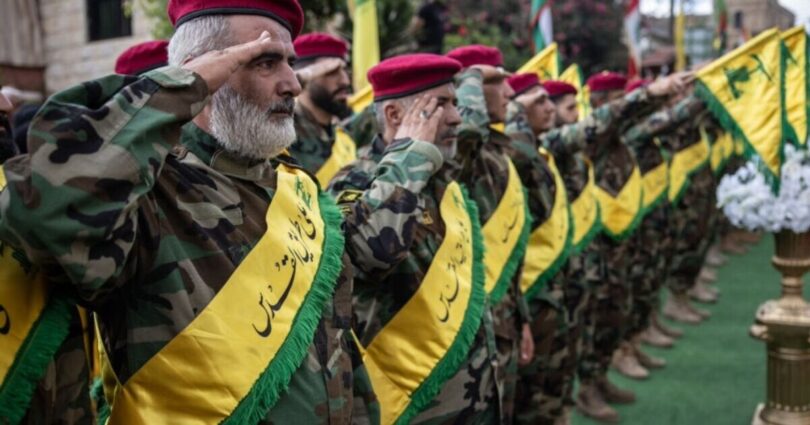
Hezbollah soldiers (Image: Getty)
This week, Washington hosted a historic event: the launch of direct peace negotiations between Israel and Lebanon. Israeli and Lebanese flags were placed side by side in the room where the ambassadors of both sides convened, with the U.S. Secretary of State seated at the center in the role of mediator. At face value, the image conveys considerable hope for a better future for both peoples. However, in Israel, many viewed it with a degree of scepticism, asking whether this process can genuinely lead to peace—or whether it reflects yet another misplaced expectations.
Since October 8, 2023, I have lived within a continuous soundtrack of war. Sirens, explosions, drones, and fighter jets constantly fill the sky above my head. When the sirens wail, which lately has been happening few times a day, I have only seconds to reach a bomb shelter, and I usually do not make it in time. For the past three years, my daughter has barely been able to attend school, and when she does, she is forbidden from going outside during recess. Even a simple trip to the supermarket requires calculating the route based on the location of the nearest available shelter.
Read more: Iran threatens horror attack on Israel as Trump’s ceasefire on verge of collapse
Read more: Trump warns Iran of ‘bigger, better and stronger’ attack as ceasefire on brink
We are living under constant fire from Hezbollah in Lebanon. The weapons fired at us are Iranian-funded or manufactered, rely on Iranian technology, and are fueled by Iranian ideology. Hezbollah serves as Iran’s proxy on our border, dedicated to spreading the values of the Iranian Islamic Revolution, which includes the explicit goal of destroying Israel.
October 2023 was not the first time Hezbollah initiated a war against us. On July 12, 2006, they kidnapped Israeli soldiers and launched rockets at our border communities. The agreement that ended that war back in 2006 was supposed to disarm Hezbollah, first in southern Lebanon and then throughout the country.
That disarmament never happened, which is exactly why Israelis are deeply skeptical about where current peace negotiations in Washington might lead. The third time was last month, while Hezbollah opened another war against Israel following specific order from its Iranian boss, that was attacked by Israel and the US.
For Israelis, Lebanon and the Lebanese people are not the enemy. In Israel, a Lebanese restaurant is a highly positive brand. It evokes thoughts of excellent food, a people very similar to us, and a genuine desire to visit Beirut one day. Conversely, the word “Lebanon” also brings back terrible memories of past conflicts.
For 17 years, between 2006 until 2023, Israel watched Hezbollah build up its forces right on our border without taking action. I saw them daily as they tracked me, photographed me, and prepared for an invasion exactly like the one Hamas in Gaza ultimately executed in southern Israel.
Prior to October 2023, Israel did nothing in Lebanon to stop Hezbollah from building its force, due to the painful memories of our past military presence in Lebanon.
Israelis genuinely want peace with Lebanon, but the diplomatic reality is highly complicated. It is akin to a marriage where one partner (Lebanon) has a destructive mistress (Hezbollah) on the side. This “mistress” directly dictates Lebanese political decisions, refuses to disarm, and heavily entrenches negative Iranian influence.
Hezbollah sits inside the Lebanese government, operating as a true shadow state. In many ways, the sovereign state of Lebanon is effectively held captive by the Hezbollah state.
Hezbollah is not a foreign invader; it grew organically from within Lebanese Shiite society. This internal integration is exactly how the group manages to hide its vast arsenals of weapons inside ordinary civilian homes across Beirut and southern Lebanon.
Because of this, an agreement cannot simply be a piece of paper if it allows Hezbollah to survive. Peace must be signed with a sovereign nation that has one government and one army committed to the treaty, not a country harboring a second army dedicated to Israel’s destruction.
We must not confuse a ceasefire with peace. Israelis want true peace; we do not want another temporary ceasefire that will merely allow Hezbollah to rebuild into the monster it was prior to 2023.
- Sarit Zehavi is a Hezbollah expert living and working northern Israel for think tank Alma