Iran’s military planning ahead of the war helped blunt the impact of US-Israeli strikes on its arsenal and leadership, according to Western military intelligence assessments, which say Tehran still retains the ability to respond if the ceasefire breaks down.
Iran has sustained massive damage to its infrastructure and its most senior leaders have been killed. But operational planning undertaken in anticipation of the conflict was effective in preventing the destruction of its missile and drone capabilities as well as maximizing the impact of its military response, people familiar with the matter said, according to a Bloomberg report.
Follow here for live updates on US-Iran war
Iran and its preparation for possible hostilities
The effectiveness of Iran’s earlier military planning also raises the prospect that it could use the current ceasefire to make preparations for any resumption of hostilities.
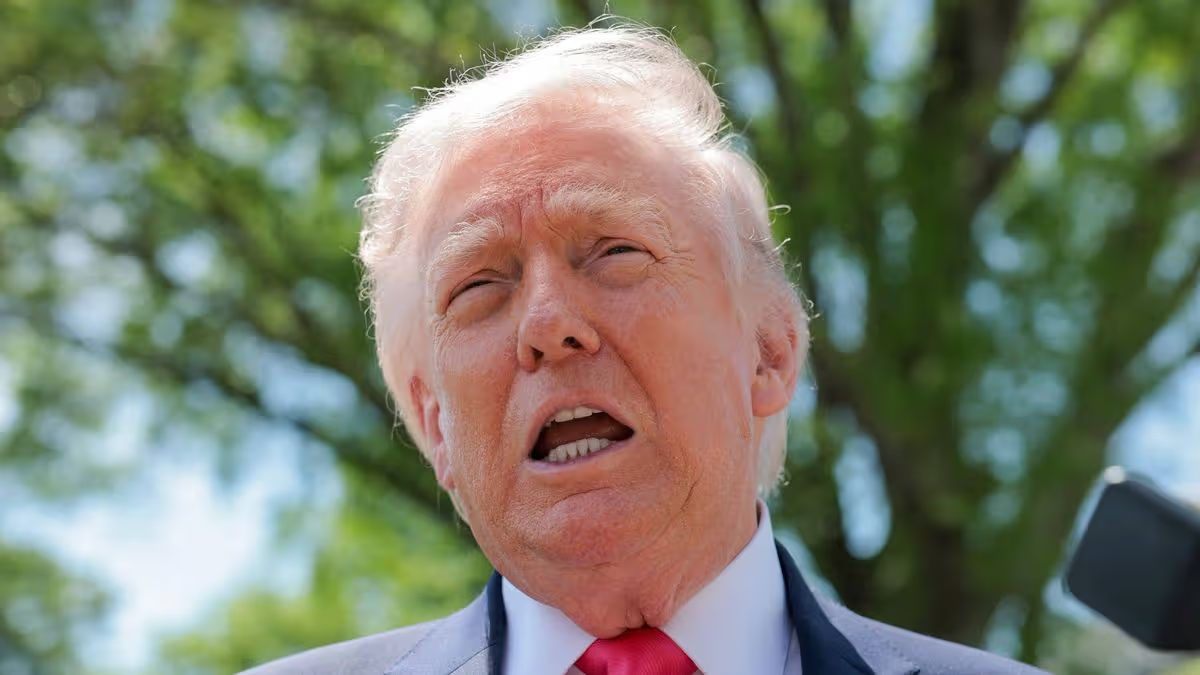
“Iran has been totally OBLITERATED, Militarily, and otherwise,” Trump posted on Truth Social on Monday. When the president announced the ceasefire last week, he said the US had “already met and exceeded all military objectives.”
Instead, plans put in place by Iran to replace senior military leaders in the event they were killed meant the country was able to minimize disruption to its command structures when they were targeted in the first days of the war, the people said.
It also appears that Iran retains solid reserves of long-range missiles, according to assessments provided by European and Gulf officials. It still has thousands of drones in its armory, the people added.
Some Western officials privately claim the US would need to conduct around two to three more weeks of strikes to completely degrade Iranian capabilities, Bloomberg reported.
But others say that may be an optimistic scenario: it could take longer, and Iran’s industrial and nuclear capabilities may still not be wiped out.
Also Read | French President Macron calls PM Modi ahead of France-UK meet on Strait of Hormuz
What is the impact of US-Iran war?
Trump said in June last year that the US had “obliterated” Iranian nuclear facilities in strikes that month. Iranian nuclear “dust” was “buried”.
The Iranian regime remains stable and unified, according to the Western military intelligence assessments, even while the killing of senior leaders including Supreme Leader Ali Khamenei and Supreme National Security Council Secretary Ali Larijani has impacted the regime’s political decision-making ability, they said.
Stung by last year’s 12-day war with Israel — which the US also joined – Iran’s leaders devised plans to decentralize decision-making across the country along provincial lines. Called the “mosaic” defense strategy, it gives military commanders more power to make decisions independently.
Israel’s attacks on Iran last year prompted the country to introduce new decision-making bodies and reshuffle its leadership strategy. This included preparations for personnel changes in the event of more targeted killings of its top commanders and leadership.