United States President Donald Trump is sending thousands more troops to the Middle East amid the prospect of new talks as he puts pressure on the Iranian regime for a deal
Donald Trump is raising the pressure on Iran ahead of possible new talks by sending thousands more troops to the Middle East.
The US president has said that a second round of talks with Iran could happen “over the next two days” with negotiations held again in Islamabad as diplomats worked through back channels to arrange them.
And the prospect of talks come as the US Central Command says no ships made it past the blockade in the first 24 hours, while six merchant vessels complied with direction from US forces to turn around and re-enter Iranian waters.
READ MORE: Trump Iran live: US ‘sends 10,000 extra troops to Middle East’ to put pressure for dealREAD MORE: Trump gushes over King Charles ahead of visit as he blasts Starmer’s ‘tragic mistakes’
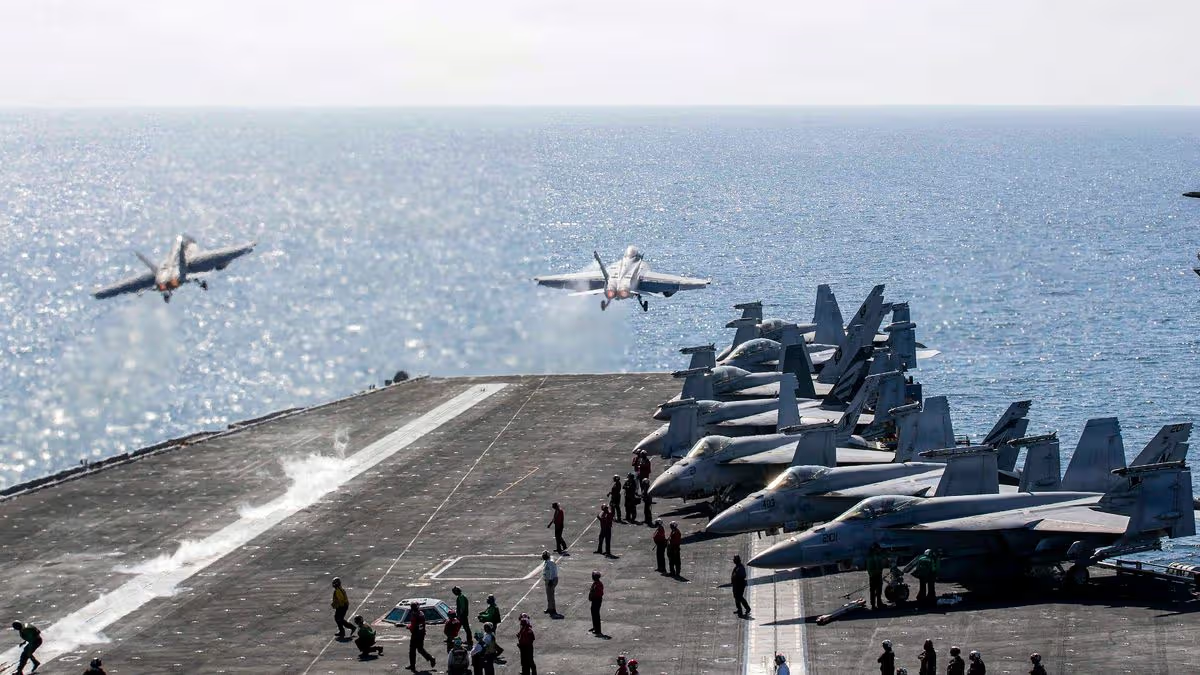
More than 10,000 further troops could also be soon arriving in the region including about 6,000 aboard the aircraft carrier USS George H.W. Bush and several warships escorting it, said officials, reported the Washington Post.
And about 4,200 others with the Boxer Amphibious Ready Group and its embarked Marine Corps task force, the 11th Marine Expeditionary Unit, are expected to arrive near the end of the month.
There are already around 50,000 US troops in the Middle East and the extra military support will be arriving as the two-week ceasefire is set to expire April 22.
Meanwhile the blockade of the Strait of Hormuz is intended to pressure Iran, which has exported millions of barrels of oil, mostly to Asia, since the war began February 28. Much of it has likely been carried by so-called dark transits that evade sanctions and oversight, providing cash that’s been vital to keeping Iran running.
Since the war began, Iran has curtailed maritime traffic, with most commercial vessels avoiding the waterway. Tehran’s effective closure of the strait, through which a fifth of global oil transits in peacetime, has sent oil prices skyrocketing, pushing up the cost of gasoline, food and other basic goods far beyond the Middle East.
Regional officials have said that the United States and Iran gave an “in principle agreement” to extend the two-week ceasefire, to allow for more diplomacy.
One of the officials, who is involved in the mediation efforts, said they are working on a compromise to the three main disputed points — Iran’s nuclear programme, the Strait of Hormuz and compensation for Iran’s wartime damages.
UN Secretary-General António Guterres said it’s “highly probable” that talks will restart, citing a meeting he had with Pakistan’s Foreign Minister Ishaq Dar. The office of Pakistan’s Prime Minister Shehbaz Sharif said he would travel to Saudi Arabia Wednesday as his country pushes to mediate new talks, before heading to Turkey for the Anatalya Peace Forum, which starts Friday.