
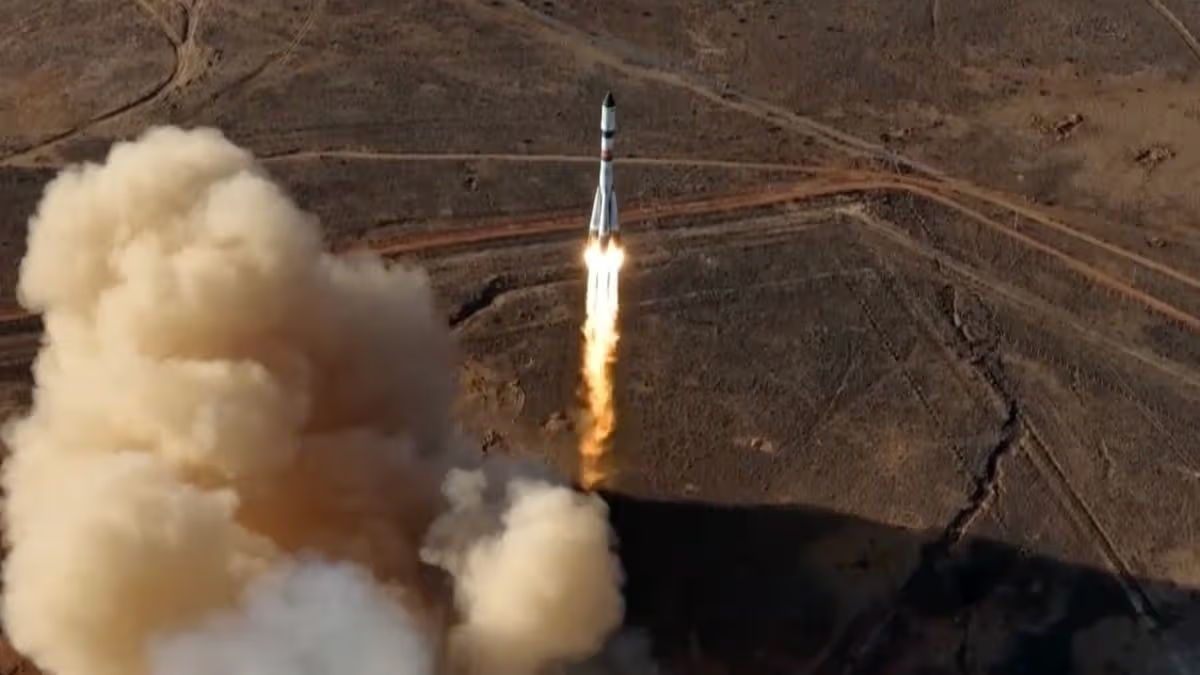
Russia has warned ships and aircraft to avoid vast areas of the Barents Sea off Norway, designating them “impact areas for Russian missiles” ahead of Russia’s planned Soyuz 2.1b rocket launch
Russia has locked down a vast area close to NATO territory as it warns of “impact” from “missiles”.
Ships and aircraft have been told to steer clear of vast areas of the Barents Sea ahead of a planned space launch. The zones, north of Norway’s Varanger and Bear Island, will remain restricted until April 30, in an unusually long safety notice for the region.
The reference to “missiles” is understood to be standard Russian terminology for rocket launches, where discarded space rocket components are officially classified as falling “missile elements”.
In this case, the warning relates to a Soyuz-2.1b launch from the Plesetsk Cosmodrome, expected around April 23. As the rocket ascends, large metal structures known as payload fairings are jettisoned and fall back to Earth, with two expected to splash down in the designated areas.
READ MORE: Russia issues ‘sleep well’ strike threat to three places in UK – see full listREAD MORE: Airline files for bankruptcy as flights cancelled – but vital firm may be saved
The alerts were issued through aviation and maritime safety systems, advising seafarers to stay clear of the zones during the launch window.
The mission is expected to carry a batch of Rassvet broadband satellites, part of Vladimir Putin’s push to build a low-orbit internet network to rival systems such as Elon Musk’s Starlink. The Barents Sea, one of the world’s richest fishing grounds, lies partly within Norwegian waters, making such extended exclusion zones notable for both shipping and fisheries.
Meanwhile, in Ukraine, Russian strikes hit more than half a dozen areas behind the front line on Tuesday and Wednesday. An eight-year-old boy was killed in the central Cherkasy region and a woman was hit in southern Zaporizhzhia, according to Ukrainian President Volodymyr Zelensky and local officials.
“Every day we need air defence missiles – every day Russia continues its strikes,” Zelensky said in a post on the Telegram messaging app.
With no plans announced for further US-mediated talks with Russia, Zelensky visited three European capitals in 48 hours to try to secure promises of further military and financial support.
Germany and Ukraine agreed on a defence package valued at four billion euros and Norway has pledged nine billion euros in assistance, Ukrainian officials said.
Ukraine has battle-tested drone interceptor expertise and has developed groundbreaking air defence technology, but lacks the money to scale up production to levels that would press its advantage.