
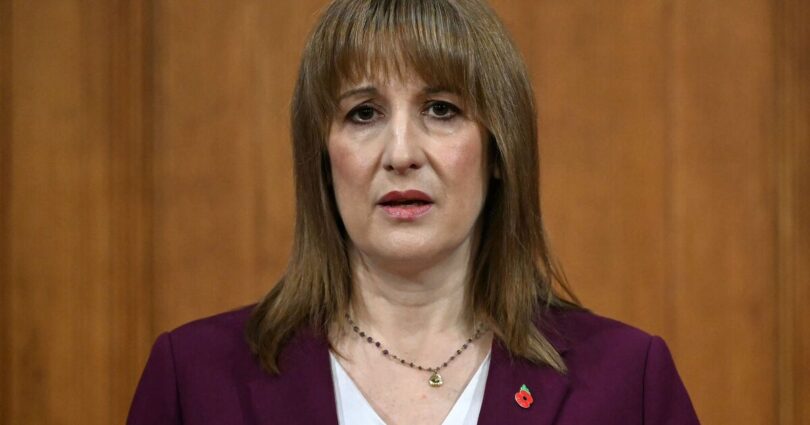
Chancellor Rachel Reeves (Image: Getty)
Rachel Reeves has branded the war in Iran a “mistake” as she took aim at US President Donald Trump for the conflict which has sent oil prices skyrocketing. The British Chancellor added that she did not think that the “conflict has made the world a safer place” in the latest criticism of Mr Trump.
She has previously said the war was “folly” and added that “this is not our war, but it is pushing up costs for UK families and businesses.” Ms Reeves risked Mr Trump’s fury with her latest remarks at a CNBC event on the fringes of the International Monetary Fundy summit held in DC. Speaking on Wednesday, she said: “There were diplomatic negotiations happening before this. So if the aim is to now to get diplomatic negotiations, well, they were already happening before the conflict started.” She added: “We’ve never been clear about what the goals of this conflict is, which is why the impacts in our economy, but also here in the US economy and around the world, and particularly for our allies in the Gulf, like Saudi and Qatar and the UAE, are so immense.
Read more: EU country makes bombshell demand as Trump launches ‘unhinged’ attacks on NATO
Read more: Rachel Reeves ‘considering major tax changes’ to lure millionaires back to UK

Reeves wants to bring down the cost of living (Image: Getty)
“We need to reopen that Strait of Hormuz to get down energy prices and to strengthen and stabilise I believe that you can’t have economic security without national security. Energy security is a key part of that. But to have energy security, you’ve got to have those key waterways open, which we don’t at the moment.”
Despite transatlantic strains over the Iran war, Ms Reeves said the UK and US have a “long, lasting and enduring” relationship – hours after Mr Trump described as “sad” the state of the “special relationship”.
The Chancellor said: “The US-UK relationship is long, lasting and enduring, and our King is going to be here in Washington in just a couple of weeks’ time.
“I think that is just one example after President Trump’s state visit, second unprecedented state visit to the UK last September, I think shows the deep ties on so on so many levels between our two great countries
“Friends are allowed to disagree on things. That is natural, whether it is two friends that have known each other for many years, or two countries that have had this special relationship for many decades
“Actually, when you are friends, you can speak your truth and deliver that clear message, and that’s what we are doing in the UK.”
Ms Reeves has been under mounting pressure to tackle the cost of living crisis, which has left British households reeling from higher prices at the petrol pump, inflationary pressures and rising unemployment. Speaking earlier this week the Chancellor said her priority was “economic security – keeping costs down, taking back control of our energy security, and acting responsibly in the national interest.”
She added: “A sustained ceasefire and avoiding knee-jerk responses is key to limiting costs for households. In Washington, I’m urging a co-ordinated response focused on stability, including safe passage for energy supplies through the Strait of Hormuz.”
Our community members are treated to special offers, promotions, and adverts from us and our partners. You can check out at any time. Read our Privacy Policy
The closure of the Strait of Hormuz, initially by Iran, was done in response to US airstrikes in Tehran and the wider country.
A vital trade corridor, the Strait sees a large portion of the world’s oil transported via ship through it. Since the closure oil prices have wildly fluctuated, causing mounting economic uncertainty around the world.
A ceasefire was negotiated last week, but Iran immediately accused Israel of breaking it after the country bombed nearby Lebanon. Diplomats from US and Iran then failed to negotiate a lasting settlement on the weekend, and Mr Trump proceeded to order a blockade of the Strait to prevent ships passing through from paying the Iranians a fee for doing so.
It is understood that Tehran’s nuclear ambitions were a key sticking point in negotiations for a lasting peace. Diplomats have been working behind the scenes as the US imposed its blockade of Iranian ports and Tehran threatened retaliatory strikes across the region, amid a shaky ceasefire.

The oil prices have skyrocketed following the Iranian blockade of the Strait of Hormuz (Image: Getty)
At the same time, Prime Minister Sir Keir Starmer is seeking to co-ordinate international efforts to ensure the strategic Strait of Hormuz can remain open to shipping after hostilities end.
The critical waterway, used to move one-fifth of the world’s oil and gas supplies, has become a major flashpoint in the conflict, with its effective closure by Iran hiking the cost of fuel, food and other basic goods.
But responding to the spike in prices, US treasury secretary Scott Bessent said “a small bit of economic pain for a few weeks is worth taking off the incalculable tail risk of either a nuclear Iran or a nuclear Iran that uses that weapon”.
He said “there is nothing more transient than what we are seeing now”, and added: “So the conflict will end, prices will come down, and then headline inflation will come down, and with that, gasoline prices will come down.”