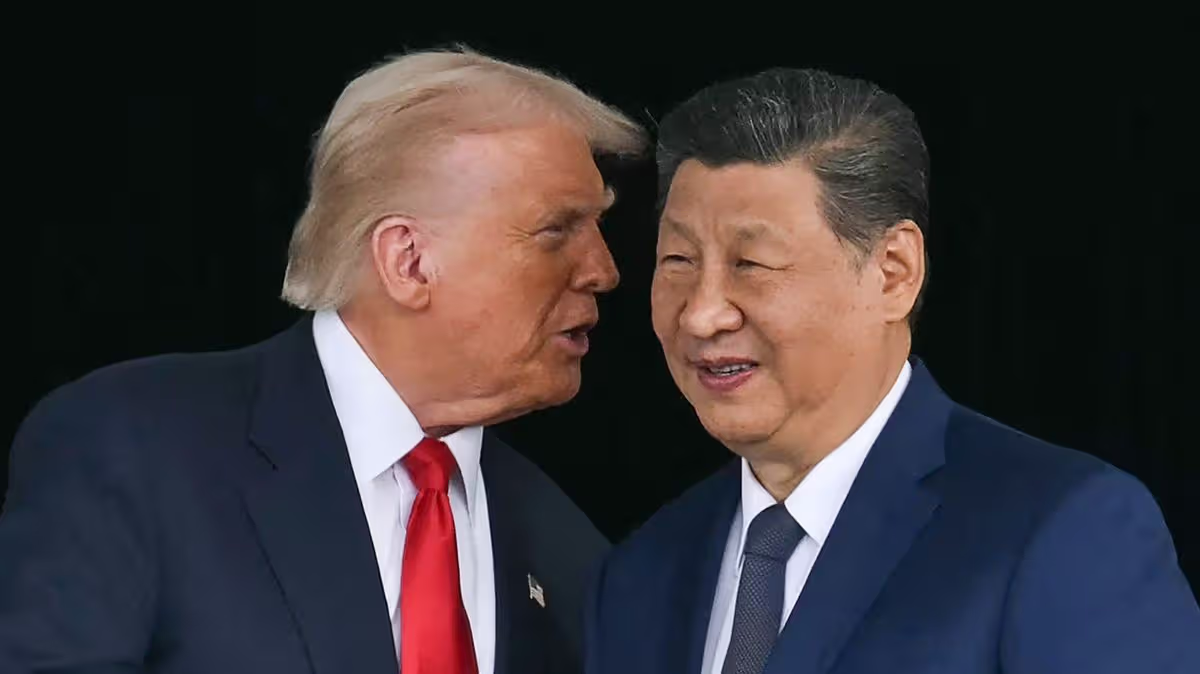
United States President Donald Trump says that he and Xi Jinping are “working together smartly” and that China has agreed not to send weapons to Iran
Donald Trump claims that Xi Jinping will give him a “big, fat hug” for opening the Strait of Hormuz.
The United States president says that he and Xi are “working together smartly” and that China has agreed not to send weapons to Iran in a Truth Social post.
Trump is set to visit China for a meeting with Trump next month amid the conflict in the Middle East with the United States military currently stopping ships from entering and leaving Iranian ports in retaliation to a blockade on the Strait of Hormuz.
READ MORE: Trump Iran live: US ‘sends 10,000 extra troops to Middle East’ to put pressure for dealREAD MORE: Trump gushes over King Charles ahead of visit as he blasts Starmer’s ‘tragic mistakes’
He wrote on Truth Social: “China is very happy that I am permanently opening the Strait of Hormuz. I am doing it for them, also – And the World. This situation will never happen again.
“They have agreed not to send weapons to Iran. President Xi will give me a big, fat, hug when I get there in a few weeks. We are working together smartly, and very well! Doesn’t that beat fighting??? BUT REMEMBER, we are very good at fighting, if we have to – far better than anyone else!!! President DJT.”
And it follows Trump saying he and Xi had exchanged letters over reported weapons sent to Iran where he was told China was “not doing that.”
Speaking to Fox Business: “He responded to a letter that I wrote because I had heard that China is giving weapons to — I mean, you seeing it all over the place — to Iran,” adding, “I wrote him a letter asking him not to do that and he wrote me a letter saying that essentially he’s not doing that.”
And on discussions likely to take place in their upcoming meeting next month, Trump said: “He’s somebody that needs oil. We don’t. He’s somebody I get along with very well — just wrote me a beautiful letter.”
Meanwhile the blockade of the Strait of Hormuz is intended to pressure Iran, which has exported millions of barrels of oil, mostly to Asia, since the war began February 28. Much of it has likely been carried by so-called dark transits that evade sanctions and oversight, providing cash that’s been vital to keeping Iran running.
Since the war began, Iran has curtailed maritime traffic, with most commercial vessels avoiding the waterway. Tehran’s effective closure of the strait, through which a fifth of global oil transits in peacetime, has sent oil prices skyrocketing, pushing up the cost of gasoline, food and other basic goods far beyond the Middle East.
Regional officials have said that the United States and Iran gave an “in principle agreement” to extend the two-week ceasefire, to allow for more diplomacy. One of the officials, who is involved in the mediation efforts, said they are working on a compromise to the three main disputed points — Iran’s nuclear programme, the Strait of Hormuz and compensation for Iran’s wartime damages.