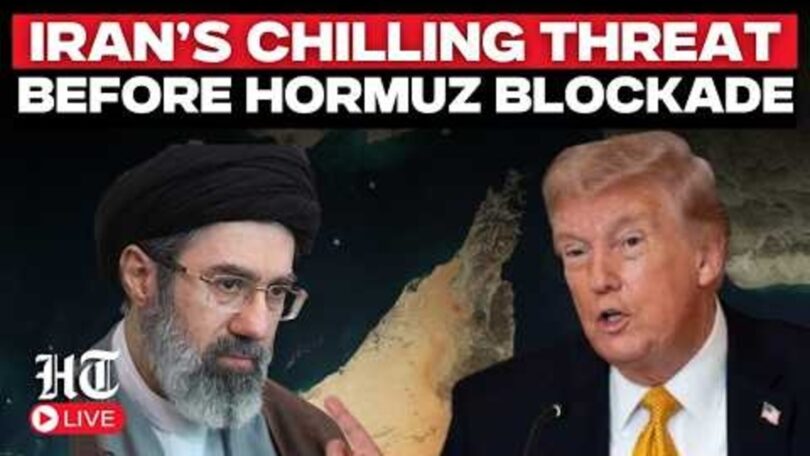
Tensions between United States and Iran escalated on Monday following US President Donald Trump’s announcement of a “naval blockade” in the Strait of Hormuz. The move prompted a sharp response from Iranian authorities, who warned of consequences if US forces approached the waterway.
Iran’s Islamic Revolutionary Guard Corps (IRGC) said any US military vessel entering the area would be treated as a violation of the ceasefire and would be dealt with “harshly and decisively”. The force also stated that Iran maintains full control over the strait and warned that any “wrong move” could have serious consequences, Press TV reported.
US deploys 15 ships in Middle East
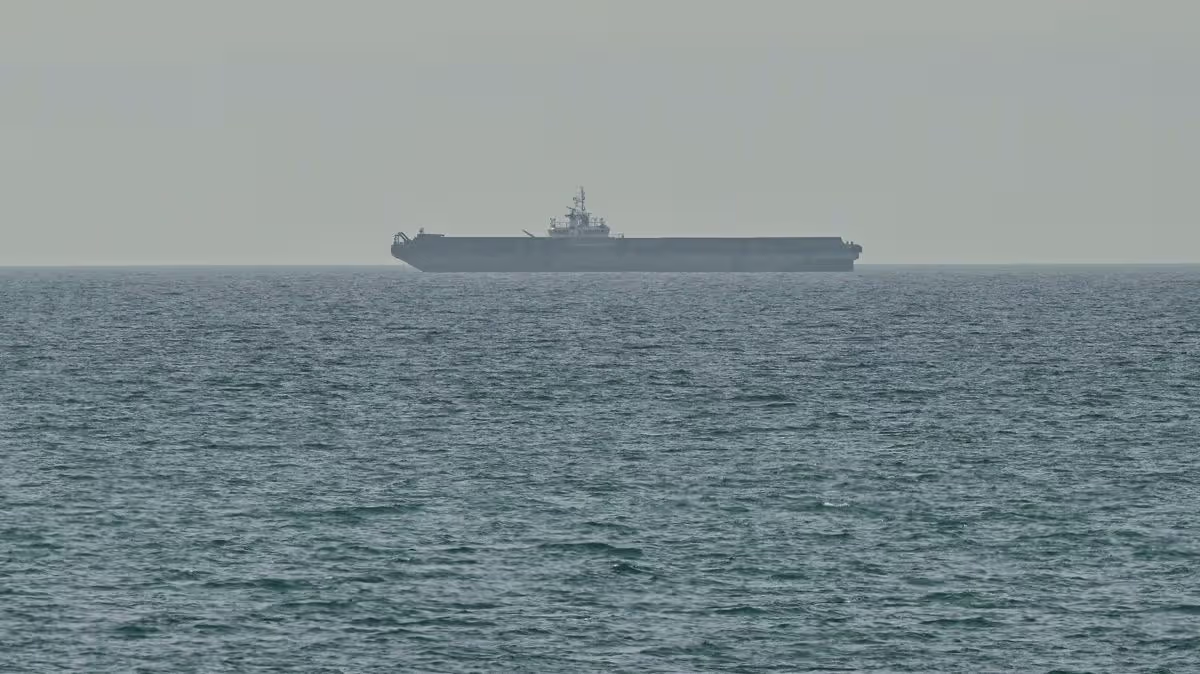
Meanwhile, the United States Navy currently has at least 15 ships deployed in the Middle East, including the aircraft carrier USS Abraham Lincoln and 11 destroyers, a US official said, according to CNN. The deployment follows orders from US President Donald Trump amid plans for a possible maritime blockade of Iranian ports.
Also read | ‘Indian memes are GOAT’: Iranian consulate shares clip mocking US’ Strait of Hormuz blockade
However, it remains unclear which specific vessels may be assigned to blockade operations, as the naval assets are spread across the US Central Command area of operations.
The deployed fleet includes the USS Abraham Lincoln and destroyers such as the USS Bainbridge, USS Thomas Hudner, USS Frank E. Petersen Jr., USS Delbert D. Black, USS John Finn, USS Michael Murphy, USS Mitscher, USS Pinckney, USS Rafael Peralta, USS Spruance and USS Milius. The Tripoli Amphibious Ready Group — comprising USS Tripoli, USS New Orleans and USS Rushmore — is also present in the region.
The naval formation is supported by additional escort and logistics vessels. Some of these assets would need to transit through the Suez Canal or sail around Africa from the Mediterranean before reaching positions suitable for any blockade operations.
Also read | Iran’s Ghalibaf drops a math equation in Hormuz blockade warning to Trump: f(f(O)) > f(O) | Here’s what it means
The deployment follows the US decision to impose a naval blockade on Iranian ports after talks held in Pakistan over the weekend failed to produce an agreement.
Iran rejects US claims, signals further capability
Iranian officials dismissed US claims of military success in the Persian Gulf and said the country had not used its full defensive capacity during the recent conflict involving the US and Israel. IRGC representatives indicated that additional military capabilities could be deployed if tensions escalate further.
Also read | US wants 20 years, Iran can do 5: Nuclear ban terms likely holding up deal, says report
Iran’s navy chief Shahram Irani described the US move as “ridiculous and funny”, while the foreign ministry criticised the blockade. It also said that US “excessive demands” had prevented progress in recent negotiations held in Islamabad.
US position and stalled negotiations
Trump defended the move and maintained pressure on Iran, stating that he was not concerned about whether Tehran would return for another round of talks. He also claimed that the US had “obliterated” 158 Iranian ships, adding that the Iranian navy is “lying at the bottom of the sea”.
Iran’s parliament speaker Mohammad Bagher Ghalibaf said Tehran would respond based on circumstances, writing: “If they fight, we will fight; if they come with logic, we will deal with logic.” He also pointed to rising fuel prices, saying: “Enjoy the current pump figures… Soon you’ll be nostalgic for $4–$5 gas.”
China called for an immediate end to hostilities, while US allies in NATO did not support the blockade plan.