Britain is expanding the pool of former service personnel who could be recalled up to age 65, while the United States prepares to automatically register young men for its existing Selective Service draft pool.
The contrast has prompted fresh debate about military readiness on both sides of the Atlantic. The UK changes apply only to a limited group of already-trained ex-regular veterans. In the US, the Trump administration is implementing a change approved in the 2026 National Defense Authorization Act (signed by the President in December 2025). Neither policy amounts to conscription.
From December 2026, eligible men aged 18 to 26 will be automatically registered with the Selective Service System through integration with federal data sources.
The policy is an attempt to streamline the long-standing legal requirement for young men to register in case a draft is ever needed — no draft is currently in force, and none has been since the Vietnam era.
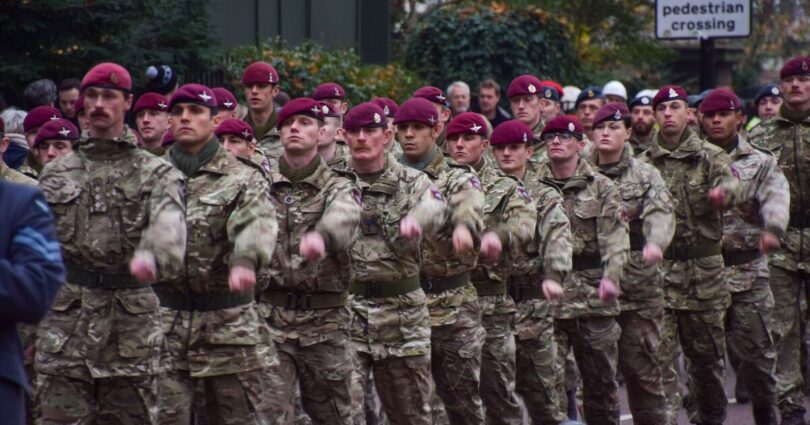
In the UK, the Labour government’s Armed Forces Bill — introduced to Parliament in January 2026 — raises the maximum recall age for the strategic reserve (primarily ex-regular veterans) from 55 to 65.
The changes, due to take effect in spring 2027, will also allow reservists to be mobilised for “warlike preparations” rather than only in cases of direct national emergency or attack on the UK. Those who have already left the military will not be affected unless they opt in.
The Ministry of Defence says the move will tap into “a wealth of expertise” from veterans with skills in areas such as cyber, intelligence, medicine and communications.
Critics, however, have described it as largely symbolic “political gesturing” that does little to address deeper recruitment and retention problems in the regular forces.
Former Defence Secretary Michael Fallon, speaking on April 8, 2026 in an interview with the Latika Takes podcast, called for a more ambitious approach. He advocated a Nordic-style competitive national service for younger people, describing it as “a badge of honour”.
Mr Fallon said: “I’d like to see us adopt some form as the Nordics have of competitive national service, where it’s a badge of honour to get selected for it.
“You set a certain number of places and open up a competition for them, and within a couple of years, you find in the Nordics — and this is something employers absolutely valued — people fought to get places on the scheme.”
He acknowledged that more should have been done to strengthen UK defences during the later years of the previous Conservative government.
The two developments are separate policy adjustments rather than new mass conscription schemes. The UK measure applies only to a limited group of already-trained ex-regulars (estimated strategic reserve pool of around 95,000), while the US change automates existing registration obligations without introducing compulsory service.
Both moves come amid ongoing NATO pressure to bolster European defence capabilities in the face of global tensions.