The rules changed this year and mean Natasha cannot return home to the UK
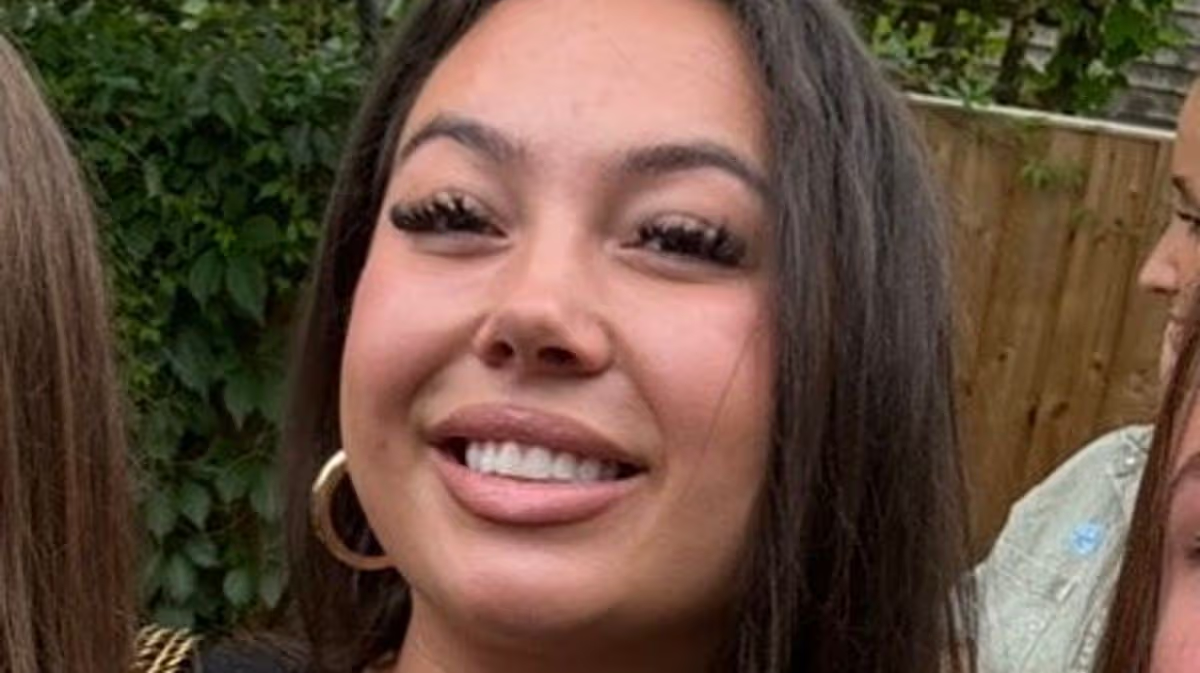
A London-born woman has been left stranded in Spain after falling foul to new changes in UK border rules which meant she was denied re-entry to the UK. Natasha Cochrane De La Rosa, 26, was prevented from boarding a return flight from Amsterdam to Luton after spending a few days there on holiday with friends on April 2.
The Home Office introduced new rules on February 25 stating dual nationals are no longer able to enter the UK using a foreign passport alone – and must now present either a British or Irish passport or possess a digital certificate of entitlement. Natasha was born and raised in Islington, North London, and has a British father and Spanish mother.
As they were unmarried when Natasha was born, her father was unable to automatically pass on his citizenship, something Natasha says has left her in a “grey area”. She says now, in order to get home she must either pay £589 for a digital certificate of entitlement or apply for a British passport.
In order to do this she says she has to “prove” her mother had free movement rights across the EU when she was born – something she says she never received paperwork for. Natasha, a client success manager, from Haringey, North London, said: “I was born in Islington, I have paid taxes, I have voted.
“I am a dual national I do have British nationality but the government are saying none of that I have lived for 26 years matters anymore. I booked a flight to Sevilla and I am staying with a family friend.
“Luckily I am privileged enough to have a haven essentially but if I didn’t have any ties to my country, didn’t speak the language or have anywhere to stay I would have been left homeless in the Netherlands. I feel the government have failed and they have a responsibility to dual nationals and the population of the UK that such dramatic and important law changes are effectively communicated.
“People are commenting on my social media posts saying they would be in the same position as me if they had not come across my story. Whilst I do take responsibility for not having checked, why would I check something that for 26 years of my life I’ve never had to do.
“The system is poorly designed and offers no support or understanding for citizens like myself who do not hit the check box but are still a British citizen”.
Natasha originally flew from Luton airport on April 2 spending a few days in Amsterdam on holiday with friends. On her planned return on April 6, she says she was able to check in, go through security and passport control and made it to the gate of her flight home before she was denied boarding.
She added:“They [the airline] called immigration on the phone basically were saying these new laws had come in. I was showing my birth certificate, my national insurance, my P45, my dad’s birth certificate and was still denied boarding as I had not got the right documentation”.
As her parents were not married when she was born in 1999, Natasha’s father was unable to automatically pass on his citizenship. Now, she either must apply for a passport which she says has a chance of being rejected – as she says there is no documentation to prove her mother had free movement rights – or pay over £500 for a digital certificate of entitlement.
She added: “There was not documentation, not to my mother or anyone with free movement rights in the EU given to them by the government. How do we prove that now? To prove it we’re having to find HMRC documents or find anything that proves she was here legally.
“It was 26 and a bit years ago so it’s been a nightmare finding the documents”.
Natasha also says after Brexit in 2021 her mother applied for settlement papers, as did her younger sister who was born in Spain which were both granted, but she says she was told she “didn’t qualify” as she was already a British citizen.
Natasha also says she is not currently able to apply for the digital certificate of entitlement at the moment, as she still does not have the documents required from her mother – and says she’s been told the process could take a minimum of three to six months, or even up to a year, to resolve.
A Home Office spokesperson said: “Since 25 February 2026, all dual British citizens need to present either a valid British passport or Certificate of Entitlement when travelling to the UK. To prove citizenship and enter the UK legally, individuals can apply for a British passport or Certificate of Entitlement from abroad.
“Public information advising dual nationals to carry the correct documentation has been available since October 2024 and a substantive communications campaign about the introduction of ETA has been running since 2023. This requirement applies to all British citizens regardless of other nationality and is the same approach taken by other countries, including the United States, Canada and Australia.”