Donald Trump is exploring military options ranging from targeted strikes to a sustained naval blockade as he tries to force Iran back to the negotiating table following the collapse of peace talks in Islamabad, according to officials
Donald Trump has threatened fresh military strikes on Iran in three key areas, following the collapse of peace talks in Pakistan.
The breakdown of the Islamabad negotiations left the White House struggling for leverage, with a resumption of heavy bombing on Tehran deemed unfeasible.
Sources close to the Pentagon say that a tighter, more targeted military operation, running alongside a blockade of the Strait of Hormuz, is seen as the next step.
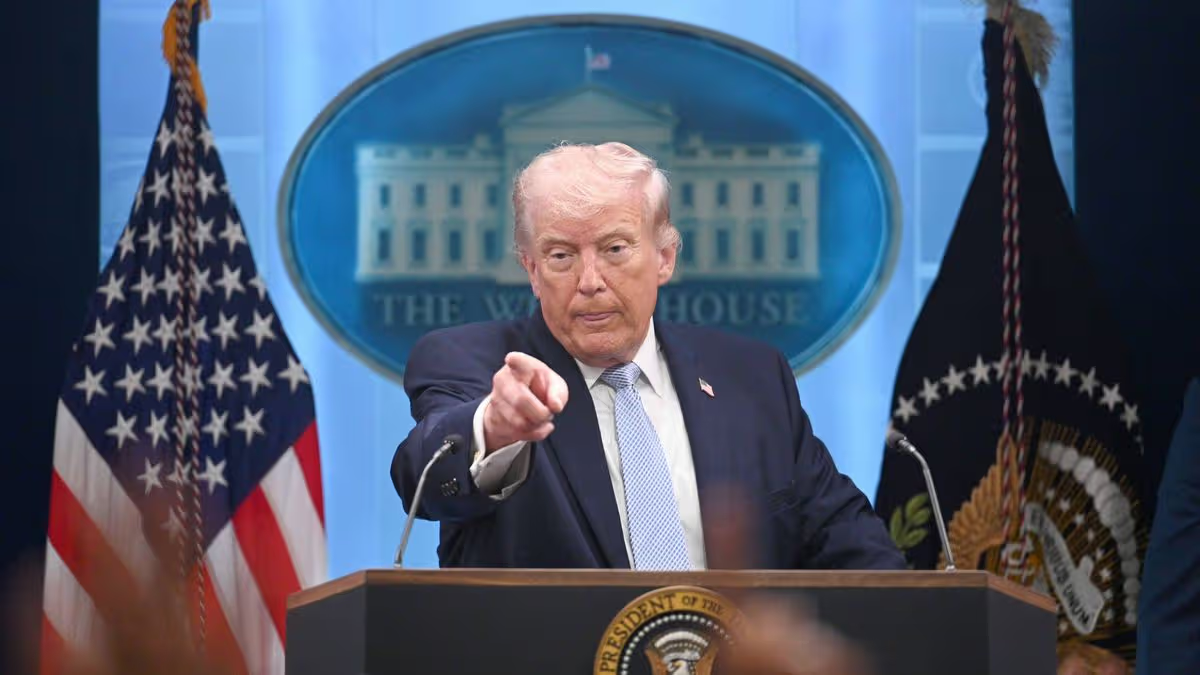
Speaking to Fox News on Sunday, Trump said: “The only major targets left are their water systems — desalination plants — and their electric generating facilities.
“Those would be very devastating to hit. I would hate to do it, but they are vulnerable. If we took them out, they could be without electricity for years — potentially a decade — because rebuilding that infrastructure takes a very long time.
“Beyond that, there are still some missile manufacturing plants and a few remaining targets. We know where they all are, and we could continue.”
The US military says that a blockade of Iranian ports will begin at 10am ET (2pm GMT) on Monday
It follows a Truth Social post from US President Donald Trump saying the US Navy will “blockade any and all ships” trying to enter or leave the Strait of Hormuz – a critical waterway for global oil shipping
The president spent Sunday at his Doral resort outside Miami, playing a round of golf and liaising by phone with his team. Those close to him indicated to reporters the diplomatic route remains open –
It was JD Vance who headed the American delegation to Islamabad, and it was Iran’s refusal to budge on its nuclear programme that brought the process to a halt, according to the Wall Street Journal.
Trump has claimed that preventing Tehran from obtaining a nuclear weapon is one of the principal justifications for the military campaign.
For any fresh negotiations to get under way, Washington has set out its demands: unrestricted passage through the Strait of Hormuz without tolls; the complete halt of uranium enrichment and physical destruction of the facilities involved; surrender of existing highly enriched uranium stockpiles; commitment to a broader regional security framework; and severing financial support to proxy groups, including Hezbollah and the Houthis in Yemen.
A senior Iranian figure, Reza Amiri Moghadam, stopped short of shutting the door entirely.
He said: “The Islamabad Talks laid the foundation for a diplomatic process that, if trust and will are strengthened, can create a sustainable framework for the interests of all parties,” he wrote on social media.