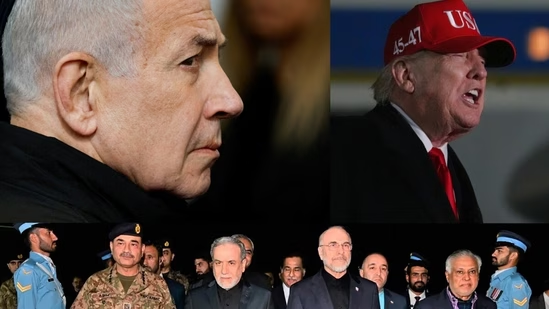
The Pakistan-mediated talks between Iran and the United States fell flat as the two sides failed to reach an agreement despite nearly 21 hours of discussions in Islamabad. However, a new factor in the peace talks has now come into focus.
At a press briefing, US chief negotiator and vice president JD Vance had announced that Washington had given its “final and best offer” to Tehran, but Iran refused. He asserted that the failure to reach a deal was “bad news for Iran” more than for the US.
Meanwhile, US President Donald Trump blamed Iran for the failed talks in Islamabad. In a post on Truth Social hours after the talks fell apart, he wrote, “The meeting with Iran began early in the morning, and lasted throughout the night — Close to 20 hours. I could go into great detail, and talk about much that has been gotten but, there is only one thing that matters — IRAN IS UNWILLING TO GIVE UP ITS NUCLEAR AMBITIONS!”
ALSO READ | Hormuz Strait, nuclear rights: Iran blames ‘unreasonable’ US demands for failed Islamabad talks
Yet, Trump reiterated that Iran will “never” have a nuclear weapon.
Amid this blame game, Iranian foreign minister Abbas Araghchi reportedly had an entirely different reason for the failed talks.
According to an X post on Araghchi’s handle, cited by Press TV, the foreign minister said that an alleged phone call from Israeli prime minister Benjamin Netanyahu to Vance during the negotiations shifted the talks.
Noting that Iran is disappointed with how the US behaved, Araghchi also said, “Netanyahu’s call to Vance during the meeting shifted the focus on US-Iran negotiations to Israel’s interest. The US tried to achieve at the negotiating table what it could achieve through war.”
ALSO READ | Deal was just ‘inches away’: Iran FM shares what happened in talks with US
Despite the report’s mention of the X post, no such actual post was found on Araghchi’s timeline.
However, the Iranian foreign minister’s latest X post does hint at last-minute changes. He said, “In intensive talks at highest level in 47 years, Iran engaged with U.S in good faith to end war. But when just inches away from “Islamabad MoU”, we encountered maximalism, shifting goalposts, and blockade.”
“Zero lessons earned. Good will begets good will,” he added.
Why US-Iran talks failed
The ‘failed’ US-Iran talks have raised concerns across the world as many factors, including the strategic Strait of Hormuz, remain in the same volatile environment as before.
Iranian state media reportedly blamed the failure on the “unreasonable” and “excessive” demands by the US. Key points of contention included the Strait of Hormuz, nuclear rights and other contentious issues, PressTV reported.
State broadcaster IRIB, meanwhile, said that the Iranian negotiating team engaged in intensive talks to safeguard national interests, but despite multiple initiatives from Tehran’s side, Washington’s demand stalled any progress, bringing the talks to an end.
“The Iranian delegation negotiated continuously and intensively for 21 hours in order to protect the national interests of the Iranian people; despite various initiatives from the Iranian delegation, the unreasonable demands of the American side prevented the progress of the negotiations. Thus, the negotiations ended,” IRIB said on Telegram.