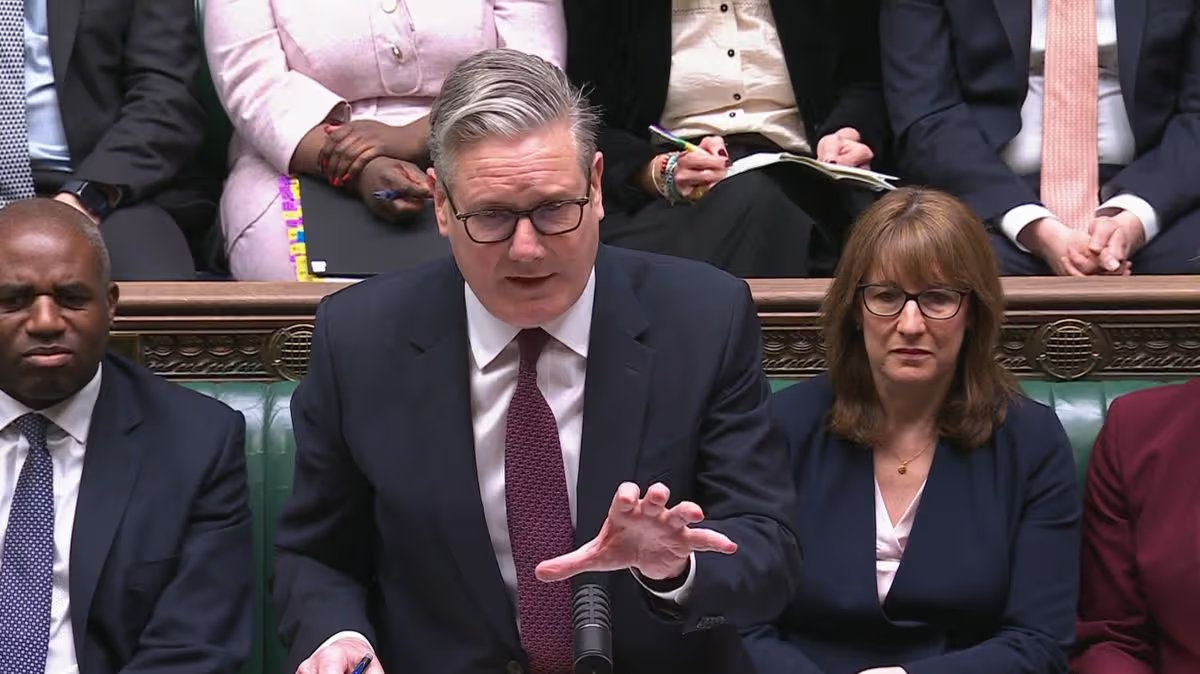
Keir Starmer answered questions from MPs in the Commons after his two-day trip to the Middle East last week – The Mirror looks at the key points from his statement
Keir Starmer said the Middle East “remains on the edge” after Donald Trump began its blockade on the Strait of Hormuz.
The PM told the Commons the UK must meet the conflict in the Middle East “calmly but with strength” as he admitted a two-week US-Iran ceasefire is “highly fragile”.
The PM made a statement to MPs after a two-day trip to the Gulf, where he held discussions on plans to reopen the Strait of Hormuz. Iran initially blocked the vital shipping lane, which transports around a fifth of the world’s oil and gas.
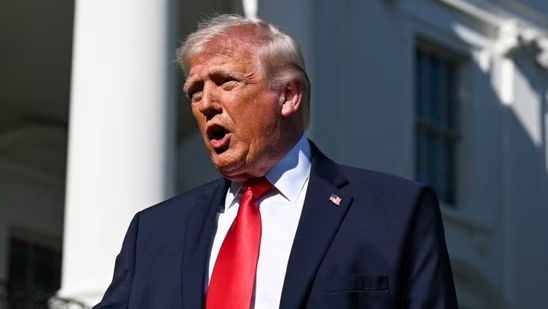
But Donald Trump today began his own blockade of the Strait, with the US President warning Iranian naval ships approaching the US Navy’s blockade of the country’s ports will be “eliminated” using the same “quick and brutal” method to destroy drug dealers’ boats.
Oil prices spiked back to more than 100 US dollars (£74) a barrel after US talks with Iran broke down and the US president made his belligerent threat to prevent ships leaving from this afternoon.
Mr Starmer admitted the world we live in “has utterly changed”, telling MPs: “As the Middle East conflict shows, once more, the world in which we live has utterly changed, it is more volatile and insecure than at any period in my lifetime, and we must rise to meet it calmly but with strength.”
Here’s some of the key points from the PM’s statement to MPs.
READ MORE: Keir Starmer slaps down Donald Trump Iran blockade plan and warns UK won’t be ‘dragged’ in
1. US blockade
The PM has been leading European efforts to try to re-open the Tehran-blockaded Strait of Hormuz. A US-Iran ceasefire attempting to reopen the Strait has faced cracks since being agreed earlier this week. Since then, Donald Trump started his own blockade of Iranian ports, which begun this afternoon, and threatens to deepen the global economic impact from the Middle East crisis.
Mr Starmer told MPs the Strait of Hormuz has been “shamefully exploited by Iran” during the conflict. Speaking about his trip to the Gulf, he said: “All of the leaders that I met were crystal clear that freedom of navigation is vital and must be restored. No conditions, no tolls and no tolerance of Iran holding the world’s economy to ransom, because the impact of Iran’s behaviour in the Strait is causing untold economic damage.”
Challenged on the US blockade specifically, the PM continued: “We are focusing our efforts on opening in full the Strait of Hormuz because of the damage it’s doing to economies around the world, including our own economy. That is why we’ve been working with other countries at various levels and will bring them together in a summit later this, week. And we, the UK, will not be joining the blockade that the President announced.”
2. Strait of Hormuz summit
Keir Starmer told MPs he will this week host a summit with French President Emmanuel Macron, focused on diplomatic efforts to end the conflict in the Middle East and military planning to help shipping through the Strait of Hormuz.The Prime Minister told the Commons: “I’ve met UK businesses in energy, shipping, insurance and finance, and they are clear that vessels will not be put through the strait until they are confident that it’s safe to do so.“And that’s why we’re working around the clock on a credible plan to reopen the strait. And I can confirm today that, together with President Macron, I will convene a summit of leaders this week to drive forward the international effort we have built in recent weeks, bringing together dozens of countries to ensure freedom of navigation in the Strait of Hormuz.“The summit will be focused on two things. First, diplomatic efforts to bring pressure to bear for a negotiated end to the conflict and for the strait to be opened. Second, military planning to provide assurance to shipping as soon as a stable environment could be established.”
3. Lebanon must be included in ceasefire
Mr Starmer reiterated that Israel’s strikes on Lebanon are “wrong” and called for Lebanon to be included in the ceasefire agreement.
Emily Thornberry, chair of the foreign affairs’ committee, told the Prime Minister her “blood ran cold” over Israel’s threat to follow “the model in Gaza” in Lebanon as she asked what the UK is doing to ensure a ceasefire in Lebanon.
Mr Starmer responded: “I want to be really clear in relation to that. That should be included in the ceasefire, and we’re using every opportunity we can to make that argument. And please, there’s some diplomacy at the moment, but those attacks should stop. And it’s really important that we’re very, very clear about that.”
He added: “Diplomacy is the right path, and I welcome the talks taking place this week. Hezbollah must disarm, but I’m equally clear Israel’s strikes are wrong. They are having devastating humanitarian consequences and pushing Lebanon into a crisis.”
4. King’s State visit
Mr Starmer insisted it is the right thing for the King’s state visit to the US to go ahead next month.
Lib Dem leader Sir Ed Davey piled pressure on the PM to change course. He asked: “Will the Prime Minister advise the King to cool off his state visit to Washington before it’s too late? Because I really fear for what Trump might say or do while our king is forced to stand by his side. We cannot put His Majesty in that position.”
Mr Starmer responded: “The relationship between our two countries is very important on a number of levels, and often what the monarchy is able to do through the bonds that they build is reached through the decades… The purpose of the visit is to mark the 250th anniversary of the relationship between our country and the United States, and that’s why the visit is going ahead.”
5. Closer relations with Europe
The UK’s response to fighting in Iran will involve “a closer economic relationship” with European governments, Sir Keir Starmer has vowed.The Prime Minister told the Commons: “Britain has been buffeted by crises for decades now, from the 2008 financial crash through austerity, Brexit, Covid, the war that still rages in Ukraine, and the disastrous premiership of (former prime minister) Liz Truss.“The response each time has been to try to return to the status quo – a status quo that manifestly failed working people who saw their living standards flatline and their public services decimated. So this time, Britain’s response must and will be different to reflect the changing world that we live in.”Mr Starmer added the UK’s response would mean “a closer economic relationship with our European allies because Brexit did deep damage to the economy”. He continued: “And the opportunities we now have to strengthen our security and cut the cost of living are simply too big to ignore.”
6. Energy independence vow
Keir Starmer has doubled down on his promise to “make Britain energy independent”, warning that billpayers are “fed up with international events beyond their control pushing up their energy bills”.The Prime Minister told the Commons that “oil and gas will be part of our energy mix for decades to come”.He added: “But we do not set the global price for oil and gas, and households across the country are fed up with international events beyond their control pushing up their energy bills, and I stand with them on that.“So we will go further and faster on our mission to make Britain energy independent, because that is the only way we get off the fossil fuel rollercoaster and take control of our energy bills.”