The continued escalation between Iran and the US in the Strait of Hormuz – which typically sees a fifth of the world’s oil pass though it – could lead to another hit in the ‘cost of living’ and more economic chaos, experts warn
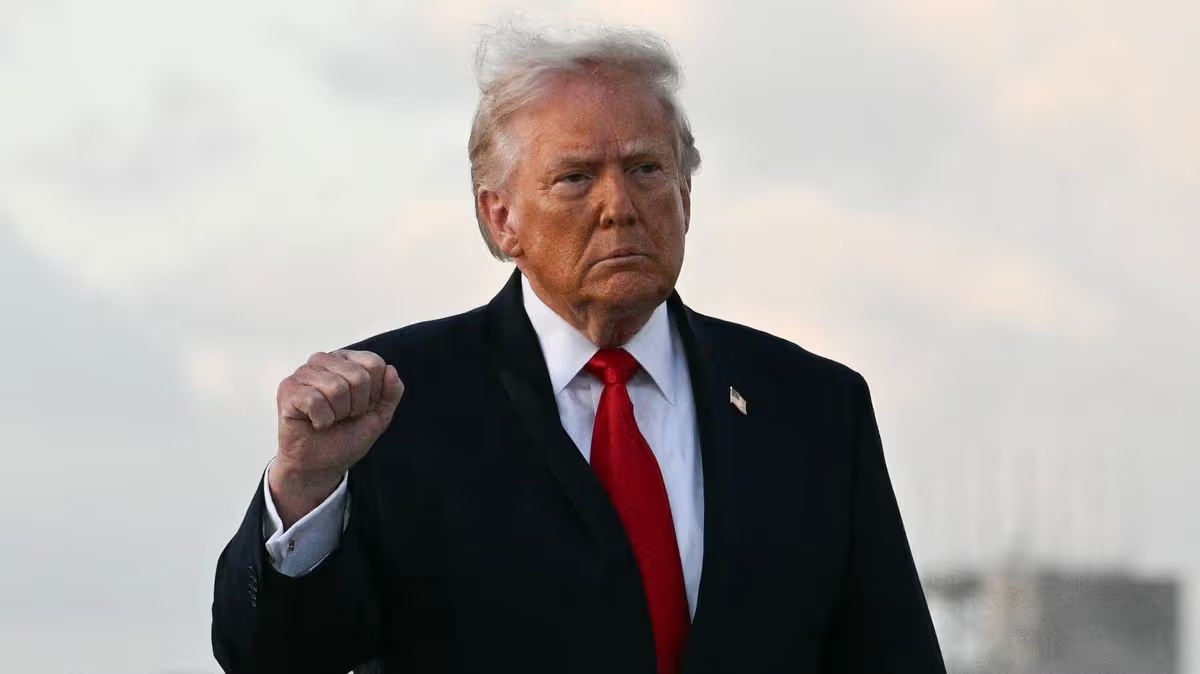
Donald Trump warned that the US Navy would start a blockade of the all-important Strait of Hormuz after peace talks with Iran fell apart, marking a new low in the Middle East war.
The US President in a fiery message online said the Navy would stop any vessel that has paid Iran a huge toll to leave or entre the waterway. This comes after Tehran effectively closed off the Strait of Hormuz, which sees one fifth of the world’s oil supply pass through it on a regular day, after the US and Israel started bombing Iran on February 28.
Washington and Tehran agreed on a fragile two-week ceasefire earlier this week but the pause in fighting broke down as Israel continued to attack Iran-aligned Hezbollah, in Lebanon. The Trump blockade of the Strait could help plunge to global economy into further chaos.
READ MORE: Donald Trump health fears resurface as he ‘limps’ down stairs of Air Force OneREAD MORE: Donald Trump says he could ‘take Iran out in one day’ after talks collapse
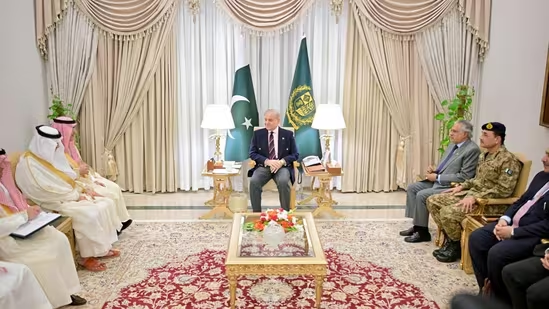
Vice President JD Vance flew to Islamabad, Pakistan, for peace talks with Iran but said negotiators from Iran “have chosen not to accept our terms” and added that he will “go back to the United States, having not come to an agreement”.
Iran hit back and said the US “ultimately failed to gain the trust of the Iranian delegation” during peace talks. Trump quickly followed with his raging rant and threat to vessels attempting to cross the crucial waterway between Iran and Oman.
In a dramatic Truth Social post, the Commander-in-Chief said the talks fell apart to a disagreement on Iran owning nuclear weapons and wrote: “I have instructed our navy to seek and interdict every vessel in international waters that has paid a toll to Iran. No one who pays and illegal toll will have safe passage on the high seas. We will also begin destroying mines the Iranians laid in the Straits. Any Iranian who fires at us, or at peaceful vessels, will be BLOWN TO HELL!”
The global economy has already been rocked by the chaos in the Strait of Hormuz, with oil prices soaring from around $70 a barrel before the conflict started to shooting up to around $120 at its worst during the conflict.
The ceasefire announcement and hope shipping could start to continue normally saw the price of a barrel fall to $92 after the fragile deal was announced. The previous rising price of oil indirectly led to a hike in prices at the pumps. The RAC revealed that a tank of petrol is now £13.86 more expensive than it was at the beginning of the Middle East conflict at £86.92.
Mohamed El-Erian, an adviser to insurer Allianz and an ex-president of Queens’ College, University of Cambridge, told The Guardian how the uncertainty caused by the continued war and blockades could hit the UK.
He said: “Absent a swift resumption of negotiations, the immediate reaction of financial markets when they open for the trading week will be to push oil prices higher and borrowing costs higher.” El-Erian added: “For the UK, all this translates into another hit to the cost of living and less flexibility for both fiscal and monetary policy responses.”
The UN Trade & Development warned the continues military escalation in the waterway and disrupted shipping flows have led to “ripple effects go far beyond the region, affecting energy markets, maritime transport and global supply chains”.
It said: “Higher energy, fertilizer and transport costs – including freight rates, bunker fuel prices and insurance premiums – may increase food costs and intensify cost-of-living pressures, particularly for the most vulnerable.”
Despite this, shipping expert Lars Jensen told the BBC Trump’s new blockade “will halt a very tiny trickle of vessels”. The expert said: “In the greater scheme of things, it doesn’t really change anything.” Jensen added: “First of all, there’s very few ships that pass. There’s even fewer of those that pay, and those that pay will already be subject to American sanctions.”