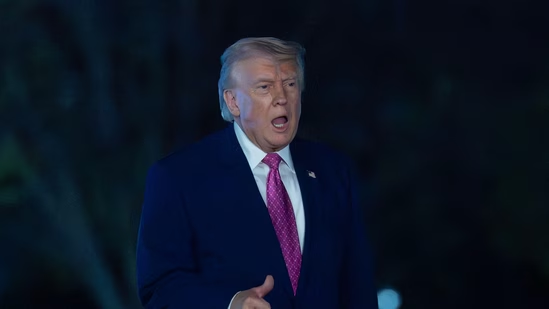
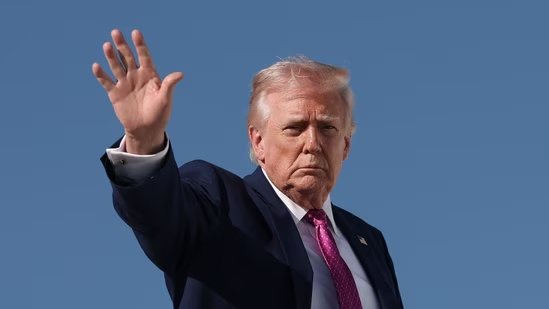
The White House considered a prime-time televised address by Donald Trump to explain the Iran ceasefire, but the plan was dropped at the last minute.
According to multiple reports, the idea of a national address surfaced just hours after Trump publicly declared a ceasefire via social media.
The primary reason, according to Reuters, was concern among senior aides about the lack of clarity around the ceasefire’s terms. Officials told the outlet that advisers were still working through key details and did not feel there was enough concrete information for Trump to confidently present to the American public.
Some aides also privately worried about “overselling” what remains a tentative agreement, Reuters reported, especially given the risk that developments on the ground could quickly undermine the narrative of success.
Also Read: Iran-US talks in Pakistan: Timing, attendees’ list, what’s on agenda; 5 things to know
While one source said Trump had been “adamant” about addressing the nation, another official noted that discussions never progressed far enough to notify television networks.
The White House, however, pushed back, stating that such discussions “never even reached” the president and dismissing reports as inaccurate.
A ceasefire still under strain
The decision comes as the ceasefire itself shows signs of strain. Despite halting US and Israeli airstrikes on Iran, the agreement has not resolved key flashpoints.
The Strait of Hormuz, critical for global oil shipments, remains blocked, contributing to major disruptions in energy markets. At the same time, Israel and Iran-backed Hezbollah continue to exchange fire in Lebanon, with both Washington and Tehran accusing each other of violating the deal.
Trump himself has publicly expressed frustration, writing that Iran was “dishonoring” the agreement and warning that “the only reason they are alive today is to negotiate.”
Also Read: ‘That’s 99% of it’: Trump shares big non-negotiable for US ahead of Iran peace talks in Pakistan
Diplomacy ahead
Talks between US and Iranian officials are set to begin in Islamabad, led by Vice President JD Vance on the American side. Vance said the US would negotiate “in good faith,” but cautioned against any attempts to exploit the situation.
Analysts remain skeptical about the prospects for a lasting resolution. Justin Logan of the Cato Institute told Reuters that a “baked-in lack of trust” between the two sides could complicate diplomacy, especially after years of shifting US policy toward Iran.
For now, the White House appears to be taking a careful approach: avoiding a major public address until there is more certainty about the ceasefire.