
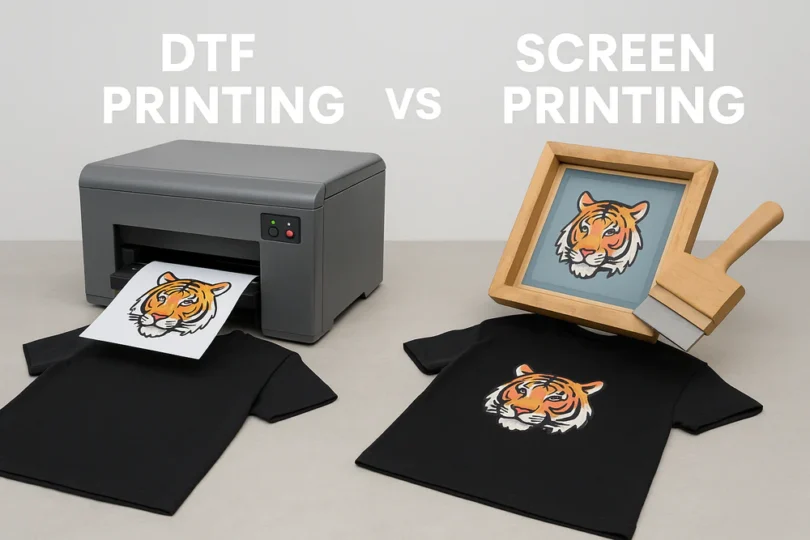
Custom kit and branded merchandise matter to every sports team, from professional clubs down to grassroots academies. For years, screen printing was the default option, but it came with limitations that made it impractical for smaller teams and complex designs.
DTF printing has changed the game entirely, offering sports teams a faster, more flexible, and more cost-effective route to professional-quality custom apparel.
Why Sports Teams Are Making the Switch
DTF Print technology has given sports clubs at every level access to professional-quality custom merchandise without the minimum order requirements, colour restrictions, and long lead times that screen printing traditionally imposed.
- No minimum order quantities, making single jerseys as affordable as bulk runs
- Full-colour designs including gradients, photographic detail, and complex artwork at no extra cost
- Compatible with polyester, cotton, blends, and performance fabrics used in modern sportswear
- Fast turnaround that works for last-minute kit orders and event merchandise
- No screens, no setup fees, and no per-colour charges that push costs up on detailed designs
- Finished transfers are wash-resistant and durable across repeated training and match wear
DTF vs Screen Printing: A Direct Comparison
Understanding exactly where DTF outperforms screen printing helps teams make smarter decisions when ordering custom kit, supporter merchandise, and training apparel.
Minimum Order Requirements
Screen printing requires a minimum run, typically 24 pieces or more per design, to offset the cost of creating and cleaning screens for each colour. DTF printing has no minimum order requirement, meaning a team can order a single personalised jersey or a full squad kit with equal ease.
Small clubs and youth academies benefit most from this flexibility as they are rarely ordering at the volumes screen printing makes financially viable.
Colour Limitations and Design Complexity
Screen printing charges per colour, making multicolour team crests, sponsor logos, and detailed artwork progressively more expensive with every additional shade. DTF printing produces the full design in a single pass regardless of how many colours, gradients, or fine details it contains.
Complex badge designs and photographic sponsor artwork cost exactly the same to print as a simple two-colour number, removing one of the biggest cost barriers for professionally branded kit.
Fabric Compatibility for Modern Sportswear
Screen printing performs best on 100 percent cotton and struggles to adhere cleanly to the polyester and performance blends that make up most modern athletic wear. DTF transfers bond reliably to polyester, nylon, cotton, spandex blends, and technical performance fabrics without cracking, peeling, or colour distortion.
For a full breakdown of how the two methods compare across fabric types, the DTF vs Screen Printing guide covers the technical differences in detail. Fabric versatility makes DTF the clear choice for teams kitting out players in moisture-wicking performance wear.
Setup Costs and Turnaround Time
Screen printing requires physical screens to be created for each colour in a design, a process that adds setup time and cost before a single item is printed. DTF printing moves directly from digital artwork to print with no physical setup required, dramatically shortening the production timeline.
Teams with urgent kit deadlines for tournaments, cup matches, or new season launches get finished merchandise days faster with DTF than with screen printing.
Durability and Wash Performance
Both methods produce durable prints when applied correctly, but DTF transfers maintain colour vibrancy and edge definition across repeated washing cycles that training and match kit endures week after week. The flexible nature of DTF ink means prints stretch and move with the fabric rather than cracking at stress points.
Consistent print quality across a full season of heavy use is a practical requirement for sports apparel that screen printing can meet but DTF now matches or exceeds at lower cost.
Customisation Per Piece
Screen printing applies the same design to every item in a run, making individual name and number customisation across a squad expensive and logistically complex. DTF printing can apply a different name, number, or size variation to each individual item within the same order at no additional per-piece setup cost.
Fully personalised squad kits with individual names and numbers are as straightforward to produce with DTF as a batch of identical training tops.
Related: How Professional Cleaning Services Help Maintain Healthier Indoor Living Environments
| Feature | DTF Printing | Screen Printing |
| Minimum Order | None | Typically 24 or more pieces |
| Colour Cost | Flat rate regardless of colours | Charged per colour |
| Fabric Compatibility | Polyester, blends, performance wear | Best on 100% cotton |
| Setup Cost | None | Screen creation per colour |
| Turnaround Time | Days | Longer due to screen setup |
| Per-Piece Customisation | Yes, at no extra cost | Not practical |
| Wash Durability | High | High |
Which Sports Applications Benefit Most From DTF
DTF printing is not just better in theory. Specific sports team applications show a clear advantage over screen printing in practice.
Match Day and Training Kit
Full squad kits with individual names, numbers, and sponsor logos across multiple fabric types are the most common application where DTF outperforms screen printing on cost, flexibility, and turnaround.
Custom match day jerseys in small squad sizes that screen printing cannot economically serve are the strongest single use case for DTF in grassroots and semi-professional sports.
Supporter and Fan Merchandise
Clubs producing replica jerseys, branded t-shirts, scarves, and supporter apparel for sale benefit from DTF’s ability to produce small restocking runs between larger orders without paying screen setup costs each time.
On-demand supporter merchandise produced in response to actual sales demand eliminates overproduction and the associated stock costs that eat into club revenue margins.
Tournament and Event Apparel
Tournament organisers, sports academies, and event hosts producing branded apparel for a specific occasion need fast turnaround, exact quantities, and full-colour design capability that DTF delivers reliably. Event-specific apparel with dates, logos, and participant names across multiple items is impractical with screen printing and straightforward with DTF.
Conclusion
Screen printing built the custom sports apparel industry and remains a viable option for large, standardised runs on cotton garments. For sports teams that need flexibility, full-colour design, performance fabric compatibility, and fast turnaround at realistic quantities, DTF printing is the stronger choice across almost every practical application.
The cost savings, design freedom, and per-piece customisation capability make it the most accessible professional printing option available to sports clubs at every level today.