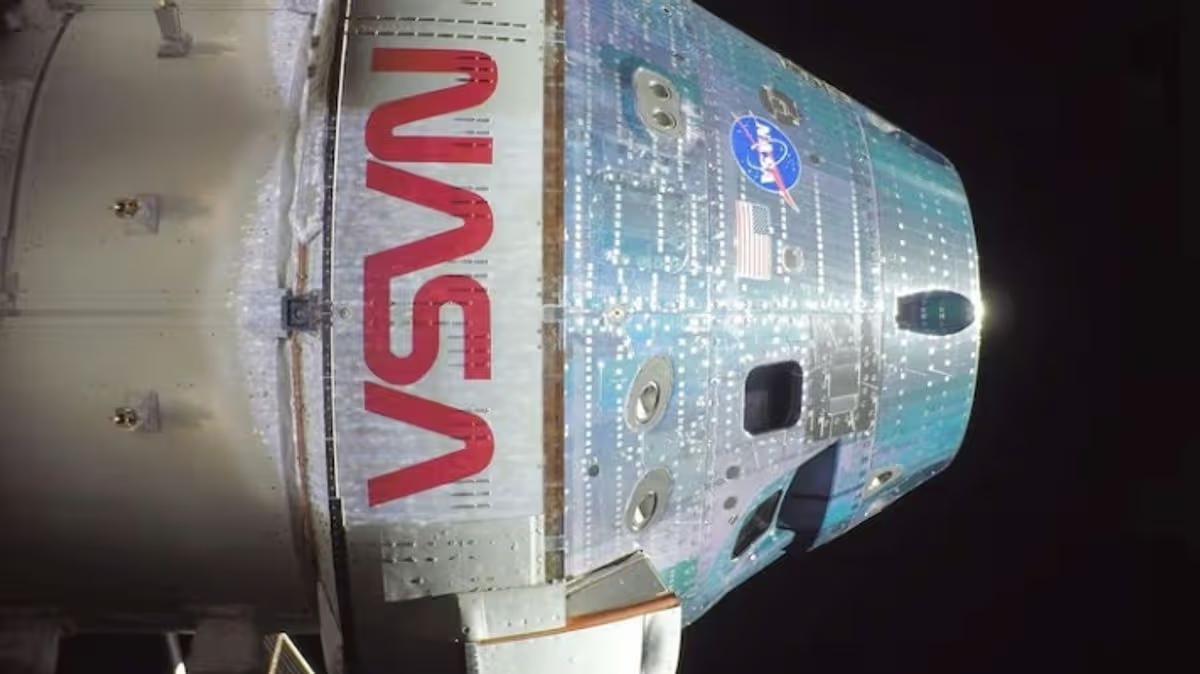
The Artemis 2 Moon mission will hit the top of the Earth’s atmosphere at an astonishing speed – with the astronauts travelling ‘as fast as anyone ever has before’
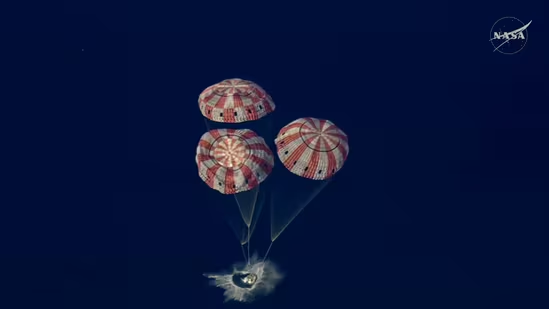
The Artemis 2 astronauts will hit the Earth’s atmosphere as fast and as hard as anyone ever has before ahead of splashdown in just a few hours time.
The “sheer speed” at which the crew on the Orion spacecraft will return to Earth is what distinguishes it from other re-entries, Chris Lintott, a professor of astrophysics at the University of Oxford, told Sky News.
“They’re coming in from this free return trajectory around the Moon, so they hit the top of our atmosphere at 25,000mph,” the professor said. “So they come in much more steeply, and they need to slow down much faster.”
After smashing through the Earth’s atmosphere, travelling at more than 30 times the speed of sound, the spacecraft will have to slow to a safe speed before it’s expected to land off the coast of San Diego at around 1.07am on Saturday morning. You can watch the mission live here:
READ MORE: Will Artemis 2 splashdown be visible from UK as NASA mission returns to Earth?READ MORE: Artemis 2 splashdown time revealed and how to watch NASA mission land on Earth
The crew of Nasa’s Artemis 2 mission were in “high spirits” as they started their return journey to Earth following a record-breaking slingshot around the Moon.
Commander Reid Wiseman said the crew were “locked in till we’re back on the navy ship and till we’re back home with our families.” The astronauts are expected to splash down off the coast of San Diego at around 8pm ET on Friday (1am BST).
The team made history by reaching the deepest point in space humans have ever visited. The Orion spacecraft reappeared from behind the moon and contacted NASA Mission Control following a 40-minute communications blackout and return of the radio signal on engineers’ monitors.
READ MORE: Artemis 2 produces first ever photos from far side of Moon – stunning pics revealed
Mission specialist Christina Koch broke the silence from Orion. She said: “Houston, Integrity, comm check. It is so great to hear from Earth again.”
Earlier after surpassing Apollo’s distance record, astronaut Jeremy Hansen told NASA that the crew would like to give names to some craters on the Moon. And he asked to name one after Artemis 2 commander Reid Wiseman’s late wife, Carroll, who died in 2020 of cancer.
“A number of years ago we started this journey.. and we lost a loved one and there’s a feature on a really neat place on the moon… at certain times of the Moon’s transit around Earth we will be able to see this from Earth,” he said.
READ MORE: Artemis 2 astronaut’s emotional words before spacecraft passed behind Moon
It comes after Jim Lovell, an astronaut in the Apollo 8 and 13 missions who gave a recorded message for the Artemis crew before he died last year, also named a crater after his wife, Marilyn, in 1968.
Congratulating the crew, US president Donald Trump said: “You have made history and made all America incredibly proud. Your mission paves the way for America’s return to the lunar surface very soon. We’ll plant our flag once again, and this time we won’t just leave footprints.”
READ MORE: Artemis 2 crew face communications blackout as astronaut says ‘let’s pray’
There have been some technical difficulties on their journey, with reports that the toilet in the tiny space capsule was making unusual smells. The Artemis 2 crew previously reported a burning smell from the Orion spacecraft’s toilet.
Engineers suspect ice may be blocking the line that is preventing urine from completely flushing overboard. A version of the Artemis II toilet was tested on the International Space Station several years ago but remains prone to dysfunction.
READ MORE: Artemis 2 crew share dramatic pictures of Earth tens of thousands of miles away
Debbie Korth, the deputy manager of Nasa’s Orion programme, said the astronauts had also reported a smell coming from the bathroom, which is buried in the floor of the capsule with a door and curtain for privacy. “Space toilets and bathrooms are something everybody can really understand … it’s always a challenge,” she said, noting that the space shuttle toilet was also often on the blink.