Uncertainty hangs over the format of high-stakes US-Iran talks set to take place in Pakistan, with conflicting reports on whether the negotiations will be direct or conducted through intermediaries.
While the talks are widely expected to be indirect, with the two sides seated in separate rooms and Islamabad officials shuttling proposals between them, as reported by news agency AFP, this remains just one of several possible formats.
According to a report in China state news agency Xinhua, Pakistan is prepared for either scenario – whether facilitating direct engagement or relaying messages between delegations, a source said.
This ambiguity deepened by a Dawn report, which said the talks will be the “first direct high-level engagement” between Tehran and Washington since 1979.
Delegations to first meet PM Sharif
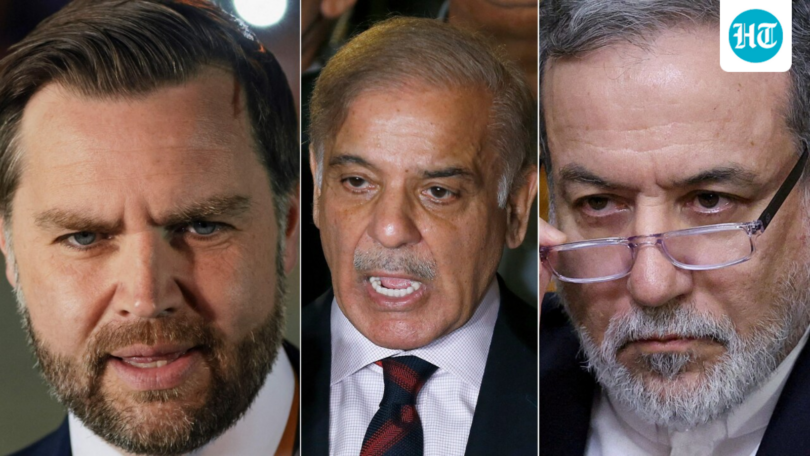
Both the Iranian and American delegations are expected to first meet separately with Pakistani Prime Minister Shehbaz Sharif. Only after these initial meetings will the main round of negotiations begin, Iran’s Mehr news agency reported.
Even as US team led by Vice President JD Vance and Iranian team led by Parliament speaker Mohammad Bagher Ghalibaf have reached Islamabad, the schedule remains fluid.
It was unclear when the talks would formally start, though Iran’s Tasnim news agency reported that Tehran’s delegation could meet Sharif around 1:00 pm local time. Based on how the discussions with Pakistan PM goes, talks could take place later on Saturday.
Tasnim also pushed back on reports by CNN that the talks would stretch over several days, saying current plans suggest they would most likely last just one day, if they proceed.
Islamabad all set for talks
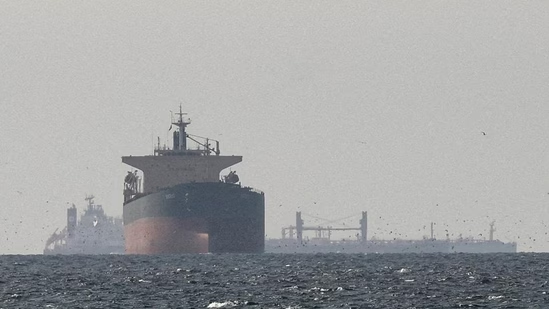
Pakistan, which played a key role in bringing both sides to the table, has assembled a team of subject matter specialists to assist discussions on navigation, nuclear issues and other key areas, a diplomatic source told news agency AFP.
Prime Minister Shehbaz Sharif acknowledged the difficulty ahead, warning that “an even more difficult stage lies ahead” in efforts to end the conflict triggered by US-Israeli strikes on Iran on February 28 and the subsequent Iranian retaliation.
“This is that stage which… is called the equivalent of ‘make or break,’” he said.
The talks are also being closely watched by regional players including Egypt and Turkey, which have assisted mediation efforts, alongside China. Beijing, in particular, has reportedly been floated as a potential guarantor of any eventual agreement, though its exact role remains unclear.
Even as diplomatic preparations continue, Iran has reiterated its position that negotiations will not proceed unless its conditions, including a ceasefire in Lebanon, are met.