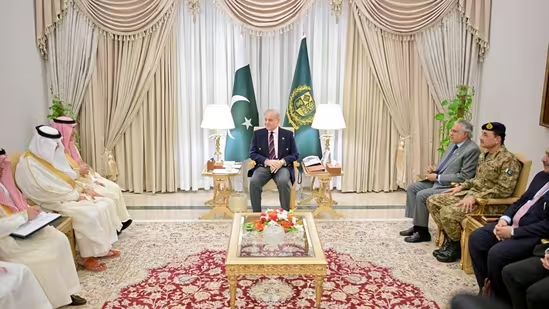
Pakistan is preparing to host critical peace talks between the United States and Iran after helping broker a two-week ceasefire. A two-day holiday has been declared in Islamabad ahead of the expected talks on Saturday, though it is still unclear if both sides will attend.
Security has been tightened across the capital, with around 10,000 police and security personnel deployed. Streets have grown quieter as the country prepares for what could be a major diplomatic moment, as per BBC.
The stakes are high globally. Countries are closely watching for a possible reopening of the Strait of Hormuz, a key route through which about 20% of the world’s oil supply passed before the conflict.
According to BBC, experts warn that Pakistan faces serious risks if talks fail. Abdul Basit, a South Asia expert, described a potential “nightmare scenario” where Pakistan could be dragged into a wider conflict.
“It is a victory in the sense that no other country in the world was able to broker the ceasefire and we were on the verge of a possible catastrophe. Pakistan averted that,” Basit said.
Also Read: ‘Only reason they are alive today…’: Trump goes ballistic ahead of US-Iran negotiations, as Vance heads to Islamabad
What is Iran’s position right now?
Iranian voices have made it clear that any move toward negotiations is not a sign of weakness. In a statement shared by Elyas Hazrati on X, it was said:
“In these forty days, Iran—through the blood of its martyrs, a government that stood bravely with the people, the valor of the armed forces, and the perseverance of Iranians of every ethnicity, view, and political orientation, inside and outside the country—imposed its will on the enemy.
Today, if there is talk of negotiations, it is a decision taken with the approval of the Supreme Leader and the consensus of the government’s main institutions, from a position of strength and with the upper hand, reflecting the standing of a nation that stood firm, resisted, and prevailed.
This is the voice of a united, proud, and steadfast Iran—one that did not retreat on the battlefield and will not retreat in the arena of politics and diplomacy from its dignity and its rights.”
Also Follow: Us-Iran War Live updates
Trump’s warnings
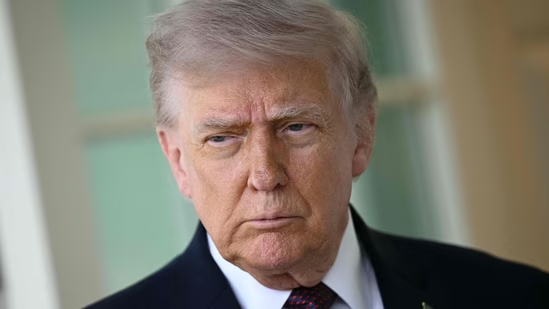
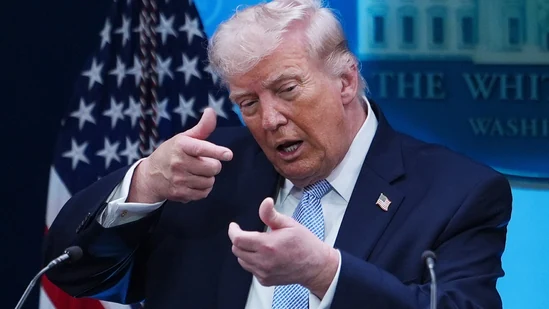
On the other side, US President Donald Trump has taken a sharp stance, questioning Iran’s intentions:
“The Iranians don’t seem to realize they have no cards, other than a short term extortion of the World by using International Waterways. The only reason they are alive today is to negotiate! President DONALD J. TRUMP”
“The Iranians are better at handling the Fake News Media, and “Public Relations,” than they are at fighting! President DONALD J. TRUMP”
Trump also warned that military action remains an option if talks fail, telling the New York Post in a telephonic interview that, “We’re going to find out in about 24 hours. We’re going to know soon.”
“We have a reset going. We’re loading up the ships with the best ammunition, the best weapons ever made, even better than what we did previously and we blew them apart,” he added.
“But we’re loading up the ships. We’re loading up the ships with the best weapons ever made, even at a higher level than we used to do a complete decimation. “And if we don’t have a deal, we will be using them, and we will be using them very effectively.”
He also raised concerns about trust in negotiations: “You’re dealing against people that we don’t know whether or not they tell the truth,” Trump said. “To our face, they’re getting rid of all nuclear weapons, everything’s gone. And then they go out to the press and say, ‘No, we’d like to enrich.’ So we’ll find out.”
What the talks mean and what comes next
As per BBC and The Post, the talks in Islamabad are expected to focus on key issues. These include US demands for Iran to hand over enriched uranium, reopening the Strait of Hormuz for global shipping, ending support for regional proxies and discussions around Iran’s missile program and sanctions.
Iran is expected to be represented by Foreign Minister Abbas Araghchi and parliamentary speaker Mohammad Bagher Ghalibaf.
However, uncertainty remains. The ceasefire is already under strain and developments in the region could impact whether talks proceed as planned.