Two of the warring parties in the Gulf conflict – the US and Iran – have begun indirect discussions amid a shaky ceasefire, with Israel under pressure over Lebanon attacks
Iran peace talks will need to bridge a yawning gap of wants and goals as negotiators come to the table in a bid to make a two-week ceasefire a permanent truce.
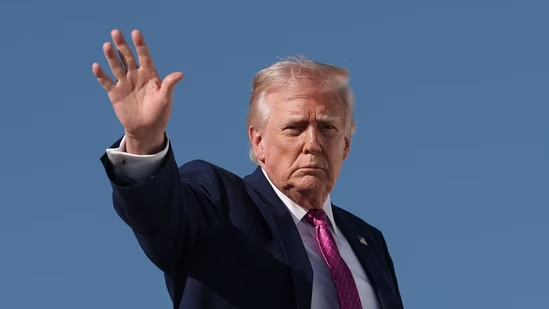
Donald Trump officially ceased US operations in the Middle East last week with a pausing of hostilities that drew a messy end to more than a month of bombardments in Iran which critics have argued accomplished very little – if anything at all. Follow-up talks with Pakistan’s prime minister began in earnest on Saturday, on a backdrop of deep disagreements and unabated fighting from the US’ Israeli warring partners in Lebanon.
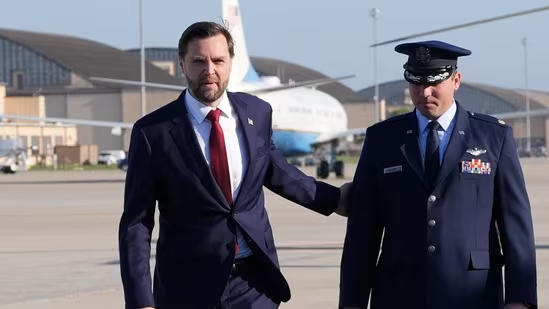
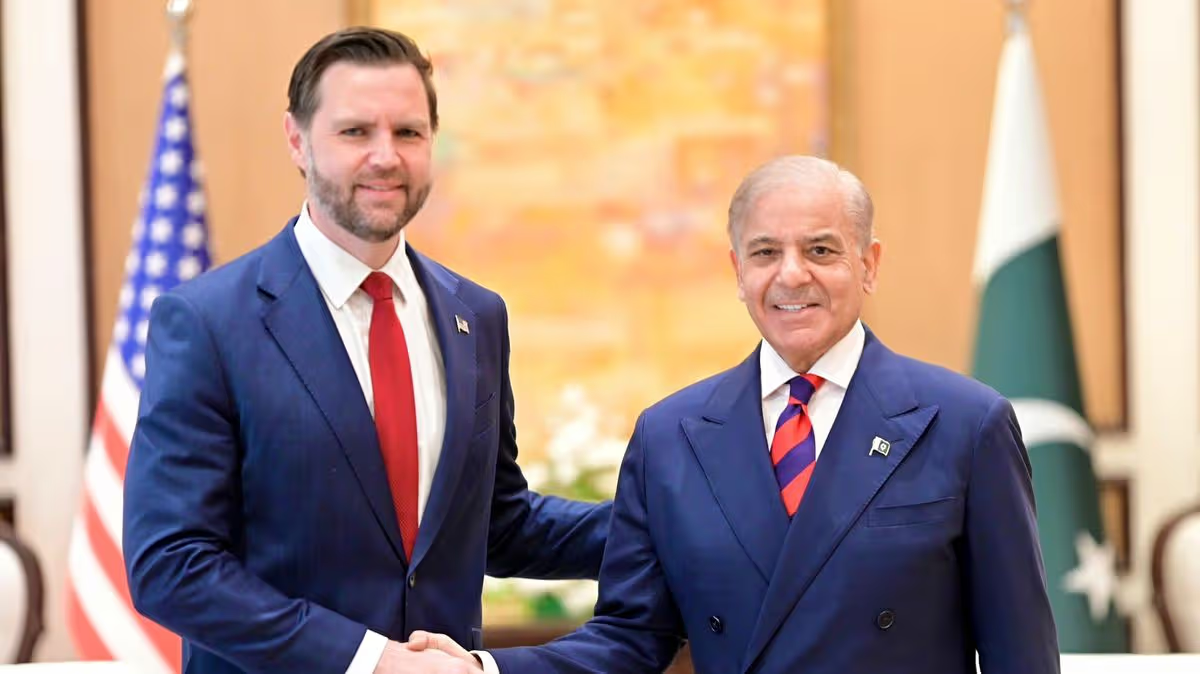
Indirect discussions reportedly got under way today between the US and Iran in Islamabad, though it was unclear if the parties were in the same room. A US delegation led by Vice President JD Vance and an Iranian delegation led by Parliament Speaker Mohammad Bagher Qalibaf must bridge several massive divides.


READ MORE: Iran war live: Peace talks ‘start’ as red lines emerge and regime’s leader ‘disfigured’
Iran’s nuclear enrichment
One of the core reasons Trump started hammering Iran was the country’s push for continued uranium enrichment, despite claims from the White House in January 2025 that its nuclear facilities had been “obliterated” and suggestions to the contrary were “fake news”. When the ceasefire was put in place, Trump proclaimed that Tehran had agreed to hand over its stores of enriched uranium.
The 15-point plan the administration handed Iran demanded the country’s regime “end all uranium enrichment on Iranian soil” to fulfill Trump’s demand that it “can never have a nuclear weapon”.
However, a 10-point plan Trump once praised as a “workable basis” for an overall deal included a demand for international recognition of its rights to continue enriching uranium. The nuclear question may actually end up being less of a sticking point than some of the others, however, as experts have said the assault on Iran has helped Tehran understand it has a new weapon: the Strait of Hormuz.
The Strait of Hormuz
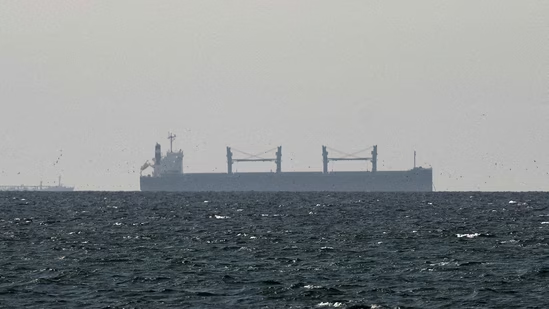
The most significant fallout from Trump’s Iranian adventure is the knock-on effect on fuel prices, with Iran having shuttered the critical Strait of Hormuz shipping artery, forcing commercial vessels to avoid the strait. The closure is Iran’s biggest strategic advantage in the war, as it has effectively blocked the passage of oil, natural gas and fertiliser to the west.
The spot price of Brent crude, the international standard for oil prices, was around $97 (£77) on Friday, up more than 30 percent since the war started.
Before the conflict, around a fifth of the world’s traded oil typically passed through the strait on more than 100 ships a day, many carrying oil to Asia. With the ceasefire in place, only 12 have been recorded passing through, and Iran has now realised it has a potent non-nuclear weapon against the west.
Speaking to The Guardian, Alan Eyre, a former diplomat who helped negotiate the Joint Comprehensive Plan of Action (JCPOA), which had effectively prevented Iran from making weapons-grade uranium, said it is a “really cool threat”.
He said: “The strait of Hormuz is such a good strategic deterrent [and] to an extent it makes the nuclear programme less crucial. It would have taken a lot of time and a lot of risk for them to weaponise [nuclear arms] … But they’ve got a really cool threat now, which is incredibly easy to turn on and off.”
Iran has proposed charging ships passing through the strait as part of a peace deal. But this has been roundly rejected by other countries, including the United States, and Iran’s neighbor Oman.
Israel’s continued assault on Lebanon
When the ceasefire was agreed last week, it was initially believed that Iran was included in the deal and wouldn’t be targeted after it came into effect. But Israel continued to fire on the nation, claiming the ceasefire hadn’t covered its regional neighbour after its forces killed almost 1,500 people in the nation.
Prime Minister Benjamin Netanyahu has claimed his forces are solely focused on Hezbollah, a militant group aligned with Iran with which Israel has been warring for decades.
Israel wants the Lebanese government to assume responsibility for disarming Hezbollah, much like was envisaged in a November 2024 ceasefire. But it is unclear whether Lebanon’s army can establish a monopoly on arms or confiscate weapons from the militant group, which has survived efforts to curb its strength for decades.
The longer continued targeting of Hezbollah lasts, the more jeopardy the overall ceasefire is placed in. Iran’s President Masoud Pezeshkian said in a statement on X last week: “The continuation of these actions will render negotiations meaningless.
“Our fingers remain on the trigger. Iran will never abandon its Lebanese sisters and brothers.” Trump has however failed to put pressure on Netanyahu to fully stop the Israeli action, saying on Truth Social last week that it would be ramped down rather than completely stopped. He wrote on his social media platform that the bombings would be “a little more low key” ahead of the talks.
Iran’s ‘forward defence’
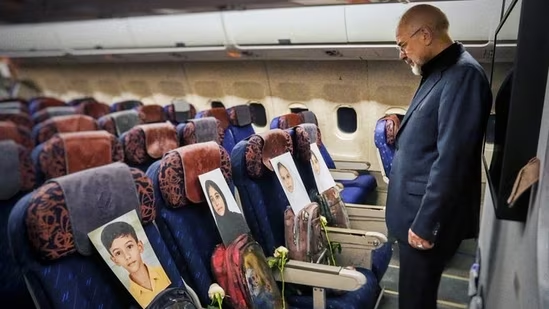
The war has killed at least 3,000 people in Iran, 1,953 in Lebanon, 23 in Israel and more than a dozen in Gulf Arab states. It has largely cut off the Persian Gulf from the global economy, sending energy prices soaring and damaging infrastructure in half a dozen countries in the region.
Iran has allies across the region that form its “forward defence”, which Israel has labelled the “Axis of Evil”, including groups labelled terrorist by the country and its western allies.
They have been under near-constant attack since the start of the war in Gaza, and Iran stipulated in its 10-point negotiation document that “all hostilities” would be ceased against its allied groups in the region. Israel and the US’ 15-point plan, however, states the exact opposite, stipulating that Iran would stop funding these groups Tehran sees as a critical extension of its own defence.
Sanctions relief
Iran’s current Islamic regime has spent most of its life under international sanctions of some kind, but US sanctions were notably lifted in part while Barack Obama’s JCPOA was in place. An important US concession under the nuclear deal was limited sanction relief, and, in exchange, Iran permitted monitoring of its nuclear stocks.
Trump pulled the US out of that deal during his first term, claiming it was the “worst deal ever”, and the latest Iran operation has brought the country back to square one a decade later.
Mohammad Bagher Qalibaf, the speaker of Iran’s parliament, said it would only come to the negotiating table if an estimated $120 billion (£89bn) of frozen Iranian was released. He claimed this, alongside the Lebanon ceasefire, was one of two previously agreed measures.
Washington has said it is open to discussing sanctions relief, but officials say this is something they would offer only after receiving concessions from Iran on its nuclear and missile programmes.