Iran’s state-run media on Friday categorically dismissed reports that senior officials had travelled to Pakistan for talks with the United States, casting fresh doubt over whether the much-anticipated peace dialogue in Islamabad will take place at all.
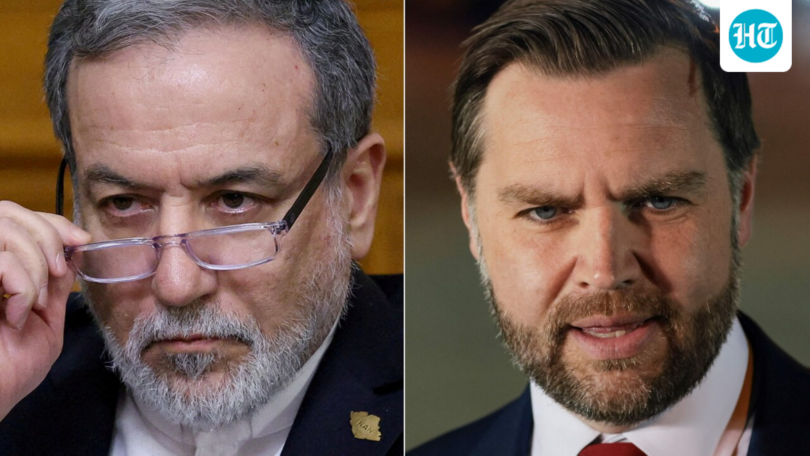
Press TV, citing Tasnim News Agency, reported that neither foreign minister Abbas Araghchi nor Parliament speaker Mohammad Baqer Qalibaf had left the country. Quoting well-informed sources, it said both officials remain in Tehran, continuing their official duties. Track US-Iran war live updates.
‘Negotiations on hold’
“The news from some media outlets that an Iranian negotiating team has arrived in Islamabad, Pakistan, to negotiate with the Americans is completely false,” the source told Tasnim.
Reiterating Tehran’s stance on peace talks, the Tasnim source cited by the state TV said, “As long as the United States does not fulfill its commitment to the ceasefire in Lebanon and the Zionist regime continues its attacks, the negotiations are on hold.”
The denial came in response to a report by The Wall Street Journal, which claimed that an Iranian delegation had arrived in Islamabad late Thursday.
Iran’s Fars News Agency also dismissed the report, reiterating that Tehran has “no plans to attend peace talks with the American side until a ceasefire is established in Lebanon.” Citing its own sources, Fars said no Iranian delegation had travelled to Pakistan, aligning with Tasnim’s position.
Lebanon remains sticking point
Adding to the mixed signals, Iran’s ambassador to Pakistan, Reza Amir Moghadam, initially indicated that a 10-member delegation would arrive in Islamabad.
“Despite skepticism of Iranian public opinion due to repeated ceasefire violations by the Israeli regime to sabotage the diplomatic initiative, invited by Hon PM Shehbaz Sharif, Iranian delegation arrives tonight in Islamabad for serious talks based on 10 points proposed by Iran,” he wrote on X.
However, the statement was deleted hours later as the situation in Lebanon deteriorated following fresh Israeli aerial attacks, which Tehran described as a violation of the ceasefire. The deletion only deepened uncertainty over whether any delegation is actually en route.
Earlier, Iranian President Masoud Pezeshkian has also raised concerns over recent Israeli strikes in Lebanon, warning that such actions could undermine the diplomatic process. “Our hands remain on the trigger. Iran will never forsake its Lebanese brothers and sisters,” he had said.
At the same time, Israeli Prime Minister Benjamin Netanyahu and US President Donald Trump have said the two-week ceasefire arrangement does not extend to Lebanon.
The already fragile truce between Washington and Tehran was rattled as within 48 hours of the ceasefire taking effect, Israel carried out its most intense strikes on Lebanon since Hezbollah entered the conflict in early March, killing hundreds on Wednesday.
Pakistan prepares despite lack of clarity
Despite the uncertainty, Pakistan has moved ahead with preparations to host the talks. Prime Minister Shehbaz Sharif had earlier announced a two-week ceasefire and said Islamabad would host dialogue between the two sides on April 10.
Deputy Prime Minister and foreign minister Ishaq Dar on Friday announced “Visa on Arrival” for delegates and journalists, even as there was no official confirmation of arrivals.
Security in Islamabad has been significantly tightened, with the Red Zone placed under heavy guard by the army and Rangers, and access restricted to authorised personnel.
Meanwhile, US media reports suggest that Vice President JD Vance is set to lead the American delegation to Islamabad. He is expected to be joined by special envoy Steve Witkoff and Jared Kushner, who have previously been involved in indirect negotiations with Tehran, reported the Associated Press.
The White House, however, has shared limited details about the format of the talks, including whether they will be direct or indirect, or what outcomes are expected.