
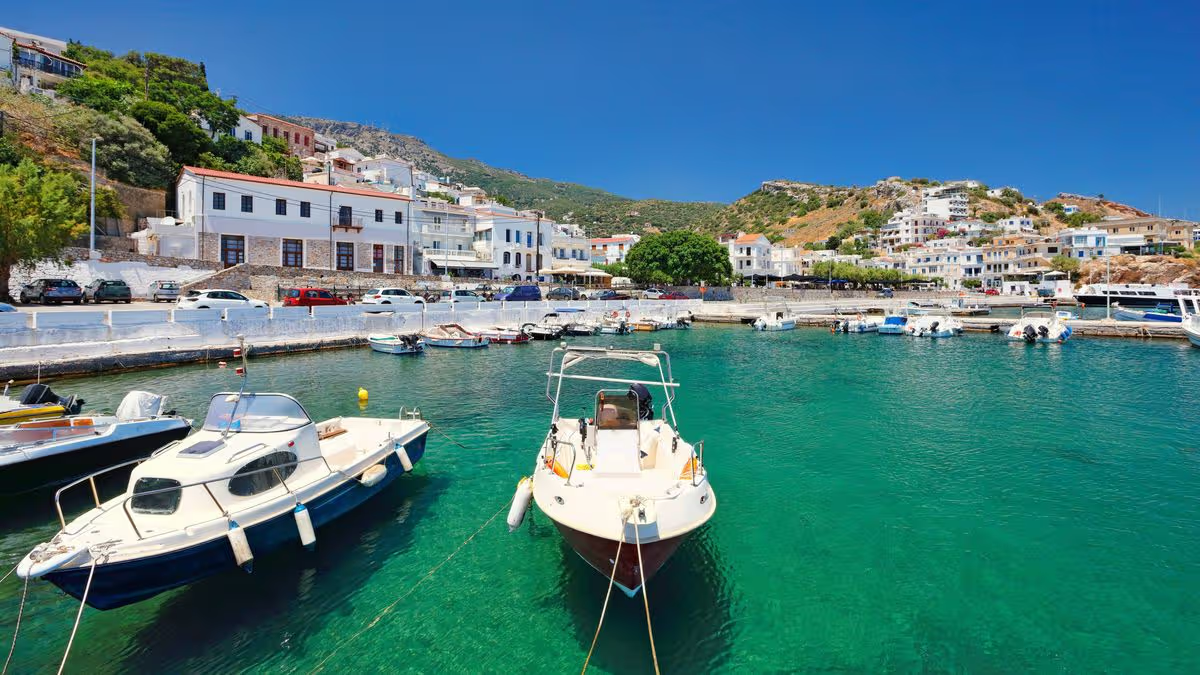
The Greek island of Ikaria is a ‘blue zone’ where residents live exceptionally long lives – and researchers have uncovered the Mediterranean diet and lifestyle secrets behind their longevity
A remote Greek island boasts strikingly clear turquoise waters, natural thermal springs – and what is widely regarded as one of the longest-living populations on the face of the earth.
The 99-square mile island of Ikaria lays claim to having more nonagenarians than anywhere else on the planet.
Research indicates that one in three inhabitants of this stunning island live to reach the age of 90.
It is little wonder, then, that scientists have been working to unlock the secret behind the elderly islanders’ extraordinary longevity – discovering clues in their Mediterranean diets, afternoon naps and active sex lives well into their later years.
Anthropologists have long championed fresh, wholesome Mediterranean diets, rich in fish and olive oil, as the key to a long and healthy life, reports the Express.
The so-called “blue zone” refers to areas dotted across the globe where populations are believed to enjoy the greatest lifespans.
Alongside Ikaria, nestled in the Aegean Sea, anthropologists have identified the world’s blue zones as including – the Japanese island of Okinawa, said to be home to the world’s longest-lived women, Costa Rica’s Nicoya Peninsula, where middle-aged mortality rates were considerably lower than average, and the Italian tourist hotspot of Sardinia.
Backed by National Geographic, bestselling author and longevity specialist Dan Buettner and his team of demographic researchers have in recent years investigated blue zones, including Ikaria, in an effort to uncover the secrets behind their remarkable lifespans.
Writing in the New York Times in 2012 about his trip to the island – recognising how earlier assertions of long-living populations had often been discredited – Buettner observed that Ikaria’s standing remained unshaken.
Researchers found record-keeping in particular villages known for residents’ longevity meant many inhabitants didn’t actually know their own ages.
Moreover, some locations discovered that reputations for longevity drew tourism.
Nevertheless, researchers in Greece found robust documentation to support Ikaria’s assertions of a long-living population.
They determined that locals reached the age of 90 at two-and-a-half times the rate Americans do.
Multiple subsequent studies revealed the island’s villagers were in relatively better health, living longer before suffering from cancer, cardiovascular disease, dementia and depression.
A University of Athens School of Medicine study examined the diet of hundreds of Ikarians, showing they consumed significant quantities of beans and fish – and ate meat only about five times a month.
The Ikaria Study also found that elderly islanders followed a diet low in refined sugar but high in olive oil.
Researchers observed the islanders drank two to three cups of coffee and two to four glasses of wine daily.
Interviews conducted by Mr Buettner’s research team showed islanders followed diets low in heart disease-causing saturated fats present in meat and dairy, and high in antioxidant-rich and pesticide-free greens grown in their own gardens.
The residents’ intake of unheated olive oil was thought to boost good cholesterol, while their diet featured goat’s milk used in feta, which contained tryptophan – a compound that triggers the so-called ‘happy chemical’ serotonin.
The Ikaria Study showed that one of the greatest secrets to a long and satisfying life may be remarkably simple: the islanders also seemed to lead predominantly stress-free lives.
Researchers found that the majority of the eldest inhabitants reported consistent physical activity, nutritious eating habits, no smoking, active social lives, afternoon naps – and notably low levels of depression.
However, Mr Buettner’s research team’s trip to the island also discovered another revealing clue to their lasting, fulfilled lives.
During interviews undertaken with Ikarians aged over 90 – most claimed to still be sexually active.