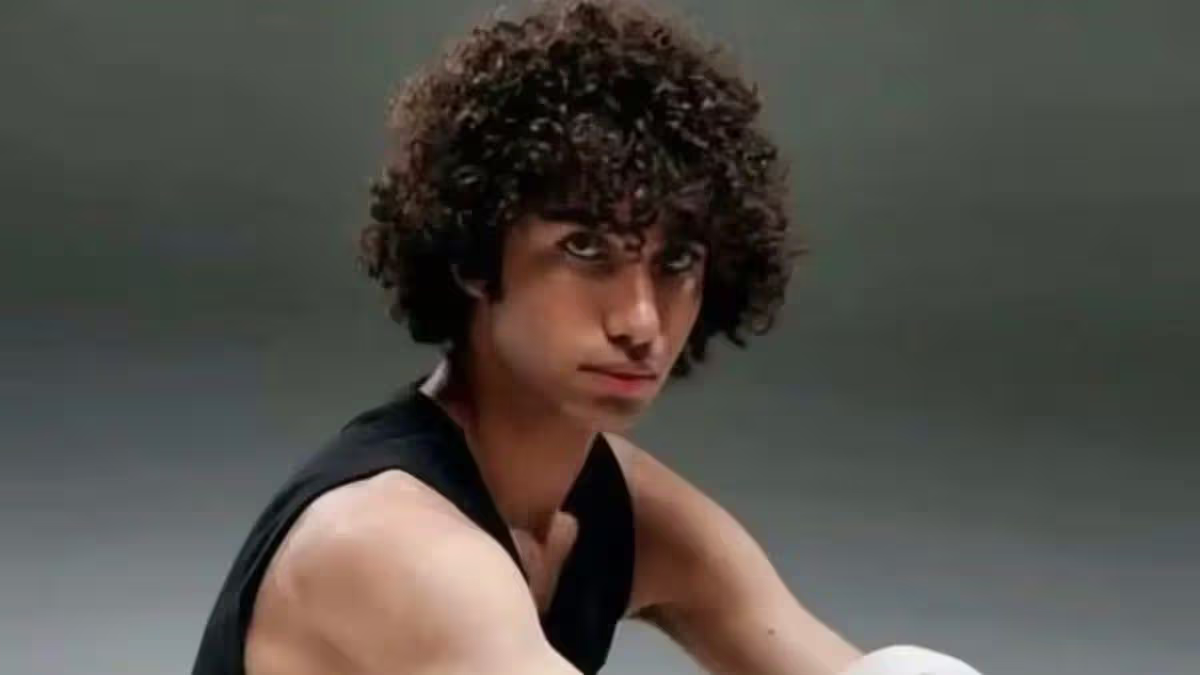
The family of an 18-year-old musician has released the poignant final video he made before he was hanged by the Iranian regime which claimed he had tried to burn down a building
The Iranian regime has been strongly criticised after it executed a teenage boy, amid fears the evil rulers will execute dozens more now that a two week ceasefire is in place.
Amirhossein Hatami, 18, was hanged on Thursday after authorities in Tehran claimed he had tried to burn down a regime’s building. But his family and friends deny this, claiming he was just an aspiring musician protesting peacefully. They released an emotional video of Amirhossein singing. In it, the video mixes a lullaby whose words he has amended with the faces of six males and a female.
It’s understood they were friends killed in the January uprisings when regime loyalists massacred thousands. Now he has been added to the list of the victims.
One of the lyrics is: “Ah, our tears are nothing, our laughter is nothing“Our loss and gain are nothing“Only your embrace remains… everything else is nothing.”
Vahid Beheshti- a veteran hunger striker who is today still protesting outside the UK Foreign Office told the Mirror: “Amirhossein Hatami is a symbol of national resistance. “By killing him – and more in the last few days – they think that they can cause terror and fear in the population. But they’re doing the opposite. “They’re making the Iranian population even more angry, more likely to rise up. The regime is even more afraid of its own population than it is of American or Israeli bombs.
“The regime is pretending to be strong but it is severely divided and may fall in days or weeks. They’ve lost almost everything – except the Western media. Amirhossein will become one of our country’s many heroes.
Hatami’s mother also released a photo of him with his last birthday cake. On 18 January, state media aired the forced confessions of five of the defendants. In the video, they are referred to as “deceived youth” who were “directed by American-Zionist terrorist elements” to attack the IRGC base in Teheran.
The revolutionary court’s notorious Branch 15 was presided over by hardline judge Abolqasem Salavati – known as the “Judge of Death” for his long history of sentencing dissidents to execution or long jail terms.
Salavati was sanctioned was in 2019 by the United States, and, earlier, by the European Union. Defence lawyers accused plainclothes forces of trapping protesters inside a building on January 8 during protests near a regime armed headquarters, run by the notorious Basij.
They said the plainclothes men had locked the doors, and themselves started the fire. The court did not allow independent lawyers to defend the accused.
After being forced into videoed ‘confessions’, Hatami and six others were found guilty of ‘Moharebeh’ (‘Enmity Against God’). On Thursday the judiciary announced he had been hanged at dawn.
Two more protesters were hanged this week. Another nine prisoners are at risk of imminent execution over participating in the January protests. They had been subjected to torture and other ill-treatment in detention, Amnesty International said, before being convicted in “grossly unfair trials based on forced confessions”.
On March 19, Iran executed 19-year-old Saleh Mohammadi, a wrestler who had taken part in international competitions. The court claimed he had helped kill three police officers during the nationwide protests. A vicious crackdown led to between ten thousand and 30 thousand protesters being shot dead, some while injured and lying in their hospital beds.
Amnesty International said it was “outraged”. It said the execution showed the judiciary is “a tool of repression sending individuals to the gallows to spread fear and exacting revenge on those demanding fundamental political change”.
Anti-regime organisations based in Europe say they believe over 100 more protesters will be sentenced to death and executed.