
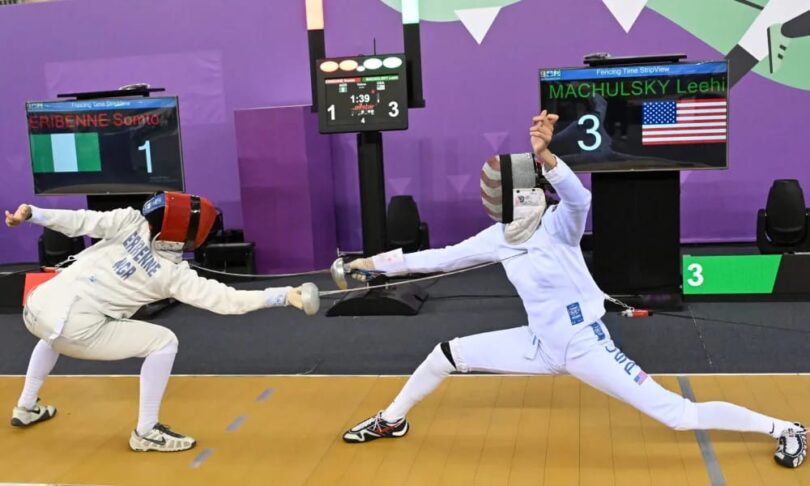

More than twenty four countries are set to converge on Lagos as Nigeria prepares to make history by hosting the Commonwealth Fencing Championships—becoming the first African nation ever entrusted with staging the prestigious competition.
READ ALSO: NPFL: ‘Players Are Charged for Survival’ – Kun Khalifat Forward Mmemoma Nnorom Targets Another Crucial Win this Weekend as Struggle for Survival Continues
Fresh from the success of the 2025 African Championships, Nigeria’s rise within the global fencing community has been swift and deliberate.
Now, under the leadership of Adeyinka Samuel, the Nigeria Fencing Federation is putting the final pieces in place for what promises to be a landmark sporting spectacle in 2026.
According to official release from.the Nigeria Fencing Federation, Preparations have gathered impressive momentum.
From competition planning to logistics, athlete welfare, and strategic partnerships, the groundwork is steadily taking shape.
For Nigeria—and indeed Africa—the significance of hosting this championship cannot be overstated.
Never before has the tournament been held on the continent. Nigeria’s successful bid, which saw it edge out strong competition including Australia, underscores growing confidence in the country’s ability to deliver world-class sporting events.
Even more symbolic was the unity among African Commonwealth nations, who rallied behind a single continental bid—an uncommon but powerful show of solidarity.
Beyond the piste, organizers are positioning the championships as more than just a sporting contest. It is being framed as a platform for youth development, cultural exchange, and sports diplomacy.
This broader vision has begun to attract corporate interest, with early backing from institutions like Rugby School Nigeria, Flour Mills of Nigeria, and World Abilitysport.
While private sector support has been encouraging, there remains a call for stronger government involvement to fully maximize the opportunity.
Hosting such a historic event offers Nigeria not only global visibility but also a chance to deepen its sporting infrastructure and international partnerships.
What will set Lagos 2026 apart is not just its historic status, but its ambition.
Organizers are weaving in development-focused initiatives, including technical exchange programs and the international training camp, ensuring that the championships leave a lasting impact on the sport across Africa.
At the same time, visiting athletes will experience more than competition—they will be immersed in the vibrancy, culture, and hospitality that Lagos is known for.
Inclusivity is also at the heart of the event, with para fencing officially integrated into the program.
Backed by international stakeholders, this move is expected to boost awareness and participation in adaptive sports across the continent.
As a sanctioned event under Commonwealth Sport, working in collaboration with the Commonwealth Fencing Federation, the championships will adhere to global standards, ensuring both quality and competitive integrity.
For Nigerian athletes, the stakes—and the opportunity—are enormous. Years of growing international exposure have sharpened their skills, and competing on home soil offers a rare chance to test themselves against some of the best fencers in the Commonwealth.
The competition itself will be staged at Rugby School Nigeria, a venue chosen for its modern facilities and strategic location near key hospitality and entertainment hubs.
It promises not only a top-tier competitive environment but also a comfortable and engaging experience for athletes and officials alike.
As the countdown continues, one thing is clear: Lagos is not just hosting a championship—it is announcing Africa’s growing presence on the global fencing stage.