Israel struck a key petrochemical plant at Iran’s massive South Pars natural gas field and killed two paramilitary Revolutionary Guard commanders, potentially challenging a new 45-day ceasefire proposal for Tehran and the US as Donald Trump’s ultimatum looms within hours.
The gas field attack on Monday was aimed at eliminating a major source of revenue for Iran, Israel said.
The field is critical to Iran’s electricity production, but the strike appeared to be separate from Mr Trump’s threats to target power plants and bridges if Tehran doe not reopen the Strait of Hormuz to all shipping traffic.
Iran’s grip on the strait has caused oil prices to surge and shaken the world economy.
Israel’s defence minister Israel Katz described “a powerful strike on the largest petrochemical facility in Iran”.
The gas field shared with Qatar is the world’s largest and sits under the Persian Gulf.
Iranian state media confirmed the attack and blamed the US and Israel.
The White House did not immediately comment, although Mr Trump was set to speak to journalists on Monday afternoon in his first public appearance since Wednesday.
He had been relatively quiet during the rescue of downed US aviators in Iran.
After Israel’s attack on the field in March, the US president said Israel would not attack it again but warned that if Iran continued striking Qatar’s energy infrastructure, the US would “massively blow up” the field.
Mr Trump’s deadline for Tehran to reopen the Strait of Hormuz is set for Monday night Washington time.
Egyptian, Pakistani and Turkish mediators have sent Iranian foreign minister Abbas Araghchi and US Middle East envoy Steve Witkoff a proposal calling for a 45-day ceasefire and the reopening of the strait, two Middle East officials told The Associated Press.
The officials spoke on condition of anonymity to discuss the private negotiations.
Iran’s foreign ministry spokesman Esmail Baghaei told journalists in Tehran that messages are being exchanged with mediators but “negotiations are entirely incompatible with ultimatums, crimes, and threats of war crimes”.
In Islamabad, two senior officials said Pakistan’s efforts for a ceasefire are at an advanced stage but “several spoilers and detractors” are trying to sow confusion through disinformation.
The officials spoke on condition of anonymity because they were not authorised to speak publicly about the talks.

Meanwhile, explosions boomed in Tehran and low-flying jets could be heard for hours.
Among those killed was the head of intelligence for Iran’s paramilitary Revolutionary Guard, Major General Majid Khademi, according to Iranian state media and Israel’s defence minister.
Israel’s military said it also killed the leader of the Revolutionary Guard’s undercover unit in its expeditionary Quds Force, Asghar Bakeri.
Israel’s defence minister vowed to keep targeting top-ranking officials.
“Iran’s leaders live with a sense of being targeted,” Mr Katz said.
“We will continue to hunt them down one by one.”
Kuwait, the United Arab Emirates and Saudi Arabia activated air defences to intercept Iranian missiles and drones as Tehran kept up pressure on Gulf neighbours, which has included strikes against infrastructure like oil fields.
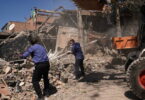
In Israel, Iranian missiles hit the northern city of Haifa, where four people from one family were found dead in the rubble of a residential building.